Following the creative revisions of developmental and line editing, the manuscript transitions into the exacting realm of technical quality assurance: copyediting and proofreading. While casual observers frequently conflate these two disciplines, they represent entirely separate operational phases within the publishing pipeline, executed by different specialists utilizing distinct editorial toolsets and criteria.
Copyediting represents the final linguistic and factual scrubbing of the raw manuscript text prior to interior interior page layout (typesetting). Proofreading, conversely, is the visual and typographical quality audit of the fully formatted, typeset page proofs (‘galleys’) to catch layout bugs, hyphenation flaws, and aesthetic typesetting errors before plates are burned for the printing press.
The Copyeditor’s Mandate: Fact-Checking and Style Harmonization
A master copyeditor interrogates a text with forensic skepticism, working across three primary axes of editorial precision:
Proofreading Galleys: Hunting Visual and Typographical Bugs
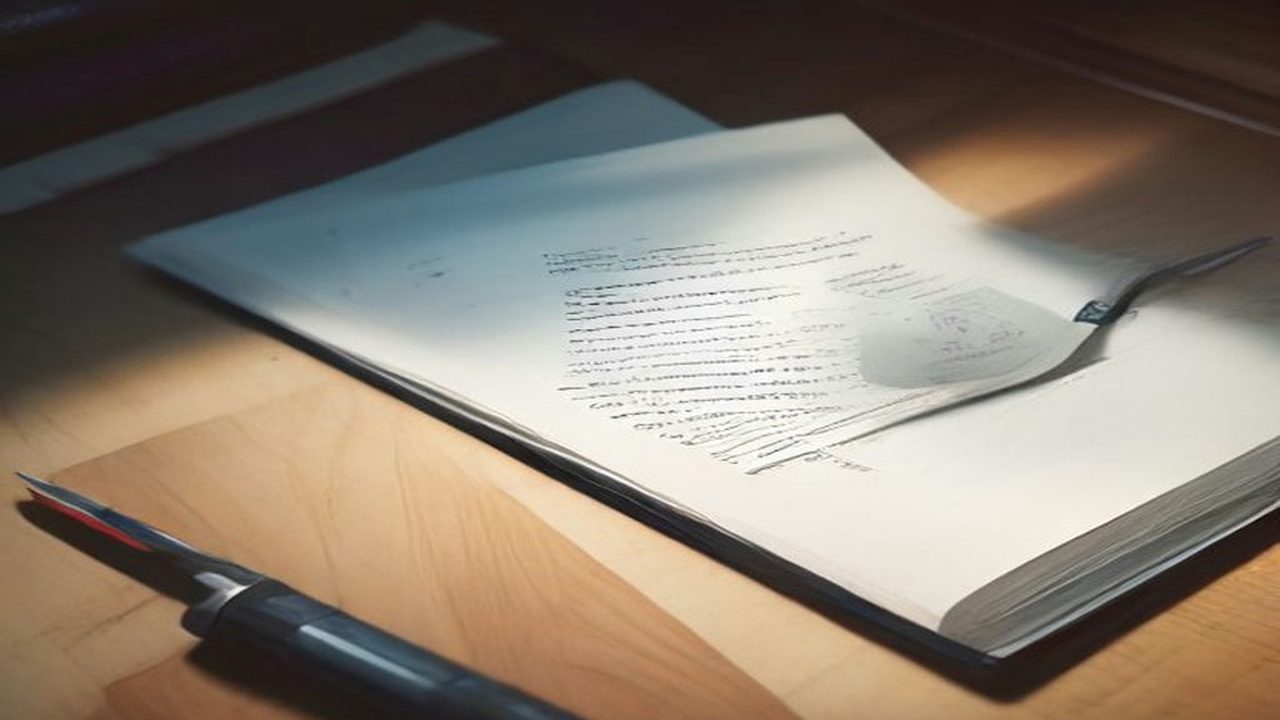
Once the copyedited manuscript is typeset into book page proofs using layout software (such as Adobe InDesign or LaTeX), the proofreader audits the visual geometry of the text. Proofreaders utilize universal proof correction symbols (codified under British Standard BS 5261 or ANSI standards) to mark corrections in page margins.
The proofreader is specifically trained to spot elusive layout artifacts that automated software word-processors overlook: widows (a short, lone word sitting at the top of a page), orphans (a single opening line isolated at the bottom of a page), rivers of white space (distracting vertical streaks of white gaps winding through justified paragraphs), laddered hyphens (three or more consecutive lines ending with hyphenated words), and bad line breaks (such as breaking apart a proper name or mathematical equation across two lines). By catching these anomalies on galley proofs, proofreaders preserve the visual dignity and seamless reading cadence of the finished volume.
Oculomotor Saccadic Mechanics and Cognitive Proofreading Blindness
The necessity for professional, multi-tier proofreading is rooted in human neurobiology and oculomotor saccadic mechanics. When an ordinary reader reads text, the eyes do not glide smoothly along the line; they move in rapid, jerky jumps called saccades (lasting 20 to 30 milliseconds), interspersed with brief stationary pauses called fixations (lasting 200 to 250 milliseconds). The brain perceives text only during fixations, processing approximately seven to nine letters around the central fovea.
Crucially, the brain’s cognitive language centers actively predict upcoming words based on context, top-down semantic expectations, and word shapes (‘Bouma’ contours). If an author reads their own draft, their brain projects the intended meaning onto the page, physically blinding the visual cortex to missing words, duplicated words (‘the the’), and subtle misspellings. Professional proofreaders are trained in bottom-up lexical decoding: slowing saccadic intervals, reading backwards or utilizing line-tracking masks to force the visual system to evaluate individual letterforms objectively rather than relying on top-down semantic anticipation.
Algorithmic Hyphenation and Penalty Matrix Optimization
Modern digital typesetting engines utilize automated hyphenation dictionaries based on Frank Liang’s hyphenation algorithm (developed for TeX). The algorithm decomposes words into overlapping sub-strings (‘hyphenation patterns’) to determine mathematically permissible hyphenation points. The copyeditor and proofreader audit these automated breaks against authoritative morphological principles: never breaking a word so that fewer than three letters sit on either line, never hyphenating the last word on a right-hand page (which forces the reader to turn the page mid-word), and preventing ‘homographic hyphenation’ where a split creates an accidental obscene or confusing word.
Publishing Industry Governance, ISO Standards, and Legal Frameworks
The global trade and commercial distribution of books are governed by formal international regulatory standards that ensure seamless copyright protection, trade interoperability, and environmental compliance across borders. Key governing frameworks include:
In addition, modern publishers operate under strict consumer safety laws, including compliance with the Consumer Product Safety Improvement Act (CPSIA) for children’s books, which enforces stringent laboratory limits on heavy metals (lead) and phthalates in printing inks and casing varnishes.
Frequently Asked Questions on the Publishing Process
What is the distinction between developmental editing, copyediting, and proofreading?
Developmental editing focuses on the big picture: structural pacing, plot, voice, character arcs, and chapter organization. Copyediting occurs after the prose is structurally finalized, focusing on sentence mechanics, grammar, syntax, fact-checking, and adherence to style guides (like CMOS). Proofreading is the final visual quality check performed on typeset page proofs (galleys) to catch typographical errors, bad hyphenation breaks, widows, orphans, and layout glitches before printing.
Why is RGB to CMYK color conversion a critical pre-press concern?
Computer screens emit light using the additive RGB color model, which possesses a wide, vibrant color spectrum. Printing presses absorb light using subtractive CMYK ink layers, which have a significantly smaller color gamut. If RGB images are sent directly to press without calibrated ICC color profile conversion, bright neon tones—such as electric blues and vivid greens—will compress unpredictably, turning into dull, muddy shades on paper.
What is the difference between an ISBN and an ISSN?
An International Standard Book Number (ISBN) is a 13-digit identifier assigned to non-serial monographic publications (such as individual books, novels, textbooks, and anthologies). An International Standard Serial Number (ISSN) is an 8-digit identifier assigned to continuing serial publications, such as daily newspapers, academic journals, annual reports, and recurring magazines.
How does Print-on-Demand (POD) compare economically to traditional offset printing?
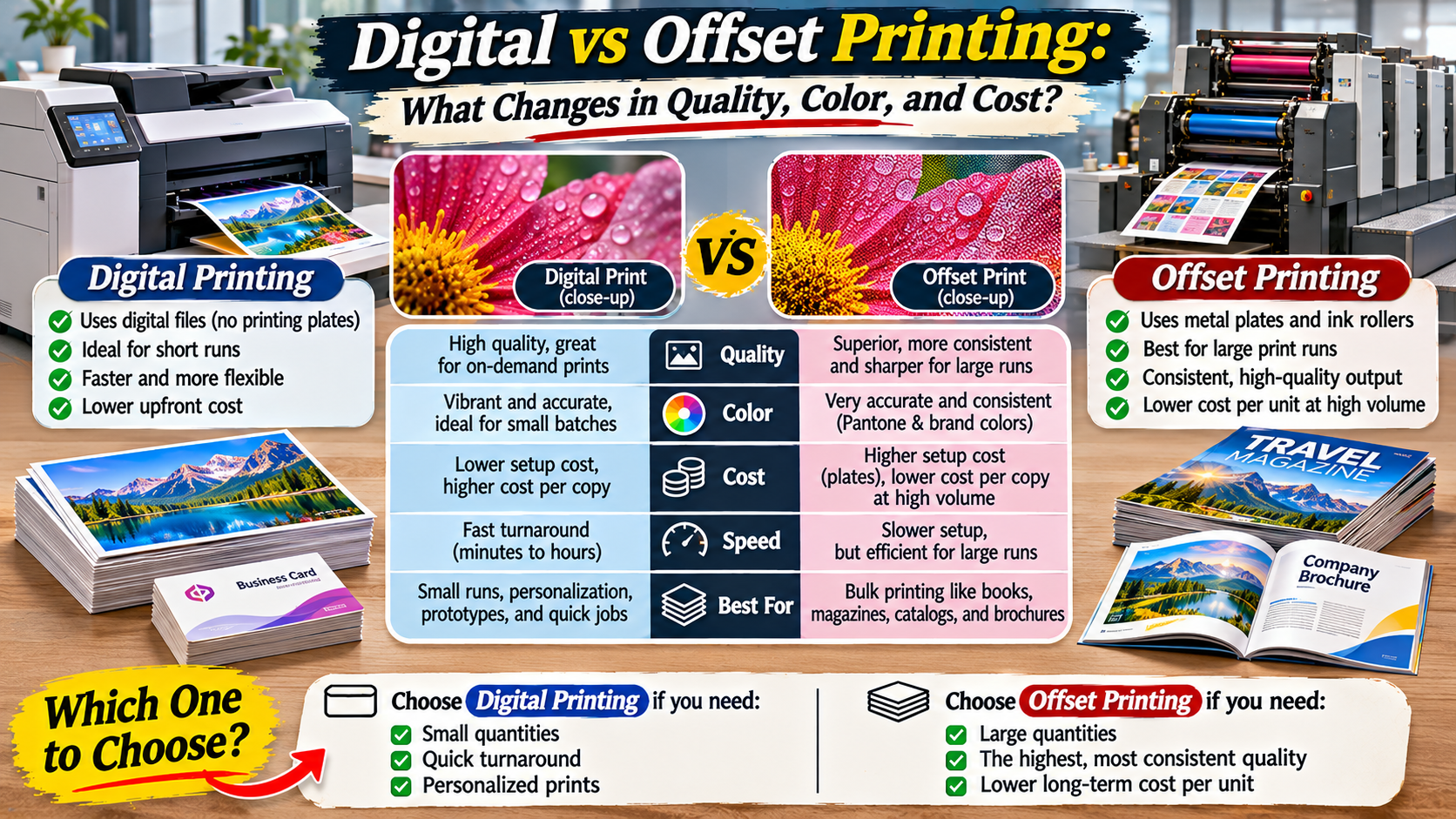
Traditional offset printing has high fixed setup costs (plates, press makeready) but very low unit costs ($2 – $3 per book on large runs of 2,000+ copies), requiring publishers to invest significant capital and manage physical warehouse storage. Digital Print-on-Demand (POD) prints single copies as orders arrive with zero upfront setup costs and zero warehouse fees, but carries a higher fixed unit cost ($5 – $8 per book), making it ideal for niche titles, self-publishers, and backlist preservation.
The Typographic Anatomy of Errors: Widows, Orphans, and White Space Rivers
In the final stages of book manufacturing, proofreaders and quality control editors examine typeset page proofs with forensic visual scrutiny. Beyond catching elusive typographical misspellings, the proofreader’s primary mission is to protect the visual harmony and dignity of the book block. A book set with flawless prose can be completely ruined by careless layout anomalies that break the reader’s cognitive immersion:
The Universal Language of Proof Correction: ANSI and BSI Symbols
To communicate corrections between proofreaders, editors, and typesetters with absolute precision, the publishing industry relies upon standardized proof correction marks (codified under British Standard BS 5261 and American National Standards Institute ANSI Z39.22). Unlike casual handwriting notes, these standardized symbols provide two-part redundancy: an in-text mark indicating the exact location of the error, and a corresponding marginal mark specifying the precise operational correction to be made.
Whether indicating a ‘dele’ (delete character), ‘stet’ (let it stand / cancel correction), transposing adjacent words, inserting a hair space, or changing a lowercase letter to true small capitals, this universal visual grammar eliminates all linguistic ambiguity, ensuring that typesetters execute complex mechanical corrections without introducing fresh errors into the digital layout file.
Fact-Checking Protocols and Scholarly Citation Verification
In non-fiction and academic publishing, the copyeditor serves as the ultimate firewall against factual inaccuracy, libel, and scholarly embarrassment. Master copyeditors execute comprehensive citation audits: cross-referencing every footnote, bibliographic entry, and archival citation against primary database sources (including WorldCat, JSTOR, and the Library of Congress catalog).
Every factual assertion—from the geographical elevation of a mountain pass and the chemical formula of a historical alloy to the exact phrasing of an archival quotation—is systematically verified. By catching factual contradictions before plates are burned, copyeditors preserve the intellectual integrity and institutional authority of the publishing imprint.
The Multi-Pass Proofreading Workflow in Contemporary Production
Professional book production never relies on a single reading pass. High-caliber publishing houses execute a structured three-pass proofreading protocol:
- Pass 1 (Cold Proofreading): A dedicated proofreader reads the newly typeset page proofs without looking at the original manuscript, experiencing the book purely as a fresh reader to evaluate natural pacing, layout bugs, and blatant errors.
- Pass 2 (Collation & Copy-Check): The proofreader compares the typeset proofs against the copyedited manuscript, verifying that every single editorial query, author correction, and layout instruction was accurately implemented by the typesetter without dropped lines.
- Pass 3 (Plate Proof Review): Following the incorporation of corrections, a final review of the digital plotter proofs (‘bluelines’ or ozalids) is conducted to ensure page numbering, running heads, and plate signatures are in flawless order prior to press authorization.