Behind every beautifully bound volume residing on a bookstore table or academic library shelf lies an intricate, multi-stage editorial architecture known as the manuscript publishing lifecycle. Far from being a simple mechanical pipeline that converts authorial prose directly into ink on paper, professional publishing is a rigorous intellectual and commercial filtering apparatus designed to shape, refine, stress-test, and polish creative manuscripts into market-ready cultural artifacts.
The publishing trajectory begins long before typesetting or press operation. In commercial trade publishing houses, university presses, and independent literary imprints, the transformation of an author’s raw draft unfolds across three foundational creative milestones: the acquisitions process, developmental macro-editing, and stylistically meticulous line editing.
The Acquisitions Funnel: Editorial Boards and Profit-and-Loss (P&L) Modeling
Manuscripts enter publishing houses primarily through literary agents or direct scholarly commissioning. When an acquisitions editor identifies a promising project, the manuscript must successfully pass through two institutional checkpoints:
Developmental Editing vs Line Editing: Macro vs Micro Architecture
Once a contract is executed, the manuscript enters the intense editing phase, which operates at two distinct analytical levels:
- Developmental Editing (Macro-Structure): The developmental editor analyzes the manuscript from thirty thousand feet. For fiction and narrative non-fiction, the editor examines structural pacing, character arcs, plot holes, point-of-view consistency, and thematic balance. For scholarly and technical works, the focus centers upon logical argumentation, chapter sequencing, pedagogy, and empirical evidence sufficiency. Authors frequently undergo multiple full-scale rewrites during this phase, restructuring entire chapters to achieve narrative coherence.
- Line Editing (Micro-Style): Once macro-structural architecture is stabilized, the manuscript transitions to the line editor. Working sentence-by-sentence, the line editor focuses on the musicality, rhythm, voice, and tonal precision of the prose. The line editor eliminates rhetorical flab, clarifies convoluted syntax, resolves repetitive sentence beginnings, sharpens sluggish dialogue, and ensures that metaphors remain vivid without drifting into cliches. Line editing transforms technically correct writing into compelling, immersive prose.
Throughout both editing stages, editors maintain comprehensive query tracking systems, marking margin comments with actionable rationales. This rigorous, multi-tiered editorial collaboration respects the author’s creative autonomy while upholding the highest institutional publication standards, ensuring that every published book reaches readers with maximum emotional resonance, intellectual clarity, and lasting cultural authority.
Cognitive Linguistics and Flesch-Kincaid Readability Algorithms
During the developmental and line editing phases of publishing, editors calibrate authorial prose to the cognitive processing thresholds of the target audience. In cognitive linguistics, reading comprehension is governed by working memory cognitive load: if sentence syntax contains excessive nested subordinate clauses or high syllabic density, the reader’s short-term working memory saturates, disrupting reading immersion.
Publishing houses utilize mathematical readability models, predominantly the Flesch-Kincaid Grade Level formula: 0.39 × (Total Words / Total Sentences) + 11.8 × (Total Syllables / Total Words) – 15.59. Line editors systematically evaluate syntactic branching: identifying left-branching sentences (which load working memory before the main subject and verb arrive) and transforming them into right-branching structures that release cognitive tension immediately, enhancing readability velocity without dumbing down thematic nuance.
Narrative Structural Topography and pacing Cadence
In developmental editing, macro-structural pacing is analyzed using quantitative narrative topography. Editors chart the distribution of narrative tension, exposition density, and dramatic turning points across the manuscript timeline. In non-fiction and academic publishing, developmental editing enforces hierarchical pedagogical scaffolding: ensuring that foundational concepts, definitions, and premises are systematically established in early chapters before complex theoretical arguments or advanced case studies are introduced in later sections.
Publishing Industry Governance, ISO Standards, and Legal Frameworks
The global trade and commercial distribution of books are governed by formal international regulatory standards that ensure seamless copyright protection, trade interoperability, and environmental compliance across borders. Key governing frameworks include:
In addition, modern publishers operate under strict consumer safety laws, including compliance with the Consumer Product Safety Improvement Act (CPSIA) for children’s books, which enforces stringent laboratory limits on heavy metals (lead) and phthalates in printing inks and casing varnishes.
Frequently Asked Questions on the Publishing Process
What is the distinction between developmental editing, copyediting, and proofreading?
Developmental editing focuses on the big picture: structural pacing, plot, voice, character arcs, and chapter organization. Copyediting occurs after the prose is structurally finalized, focusing on sentence mechanics, grammar, syntax, fact-checking, and adherence to style guides (like CMOS). Proofreading is the final visual quality check performed on typeset page proofs (galleys) to catch typographical errors, bad hyphenation breaks, widows, orphans, and layout glitches before printing.
Why is RGB to CMYK color conversion a critical pre-press concern?
Computer screens emit light using the additive RGB color model, which possesses a wide, vibrant color spectrum. Printing presses absorb light using subtractive CMYK ink layers, which have a significantly smaller color gamut. If RGB images are sent directly to press without calibrated ICC color profile conversion, bright neon tones—such as electric blues and vivid greens—will compress unpredictably, turning into dull, muddy shades on paper.
What is the difference between an ISBN and an ISSN?
An International Standard Book Number (ISBN) is a 13-digit identifier assigned to non-serial monographic publications (such as individual books, novels, textbooks, and anthologies). An International Standard Serial Number (ISSN) is an 8-digit identifier assigned to continuing serial publications, such as daily newspapers, academic journals, annual reports, and recurring magazines.
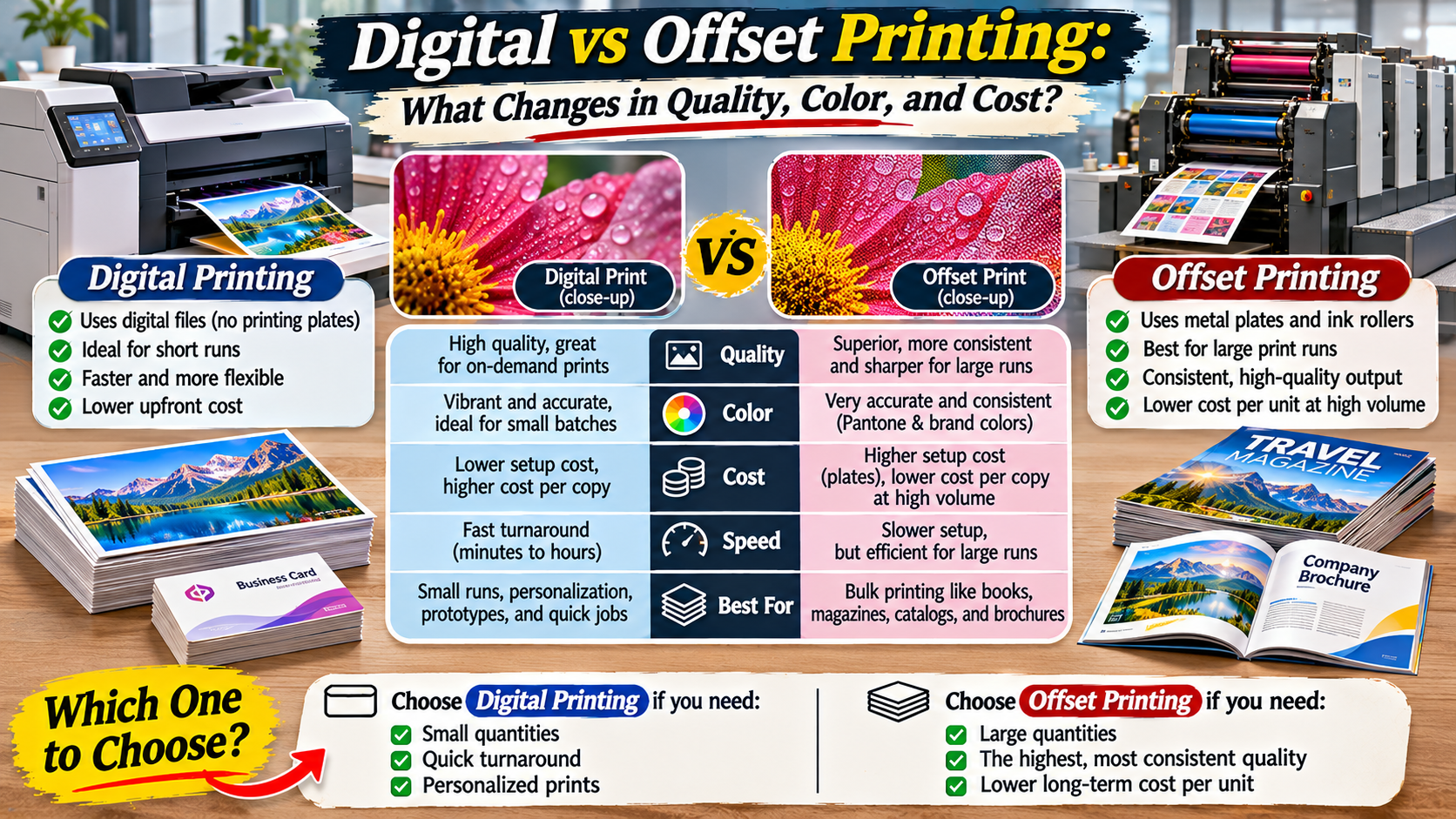
How does Print-on-Demand (POD) compare economically to traditional offset printing?
Traditional offset printing has high fixed setup costs (plates, press makeready) but very low unit costs ($2 – $3 per book on large runs of 2,000+ copies), requiring publishers to invest significant capital and manage physical warehouse storage. Digital Print-on-Demand (POD) prints single copies as orders arrive with zero upfront setup costs and zero warehouse fees, but carries a higher fixed unit cost ($5 – $8 per book), making it ideal for niche titles, self-publishers, and backlist preservation.
The Author-Editor Collaborative Dynamic and Creative Mediation
The relationship between an author and their developmental editor is one of the most intellectually intimate, creative, and psychologically complex partnerships in the cultural arts. An author pours years of emotional energy, subjective memory, and artistic obsession into a raw manuscript draft. The developmental editor, conversely, approaches the text as an empathetic yet ruthlessly objective advocate for the future reader. Navigating this dynamic requires profound diplomatic acumen, emotional intelligence, and mutual artistic trust.
A master editor never imposes their own voice or dictates rigid prescriptive solutions. Instead, through comprehensive developmental editorial letters (often spanning fifteen to thirty pages of detailed analytical commentary), the editor diagnoses underlying narrative symptoms: illuminating where pacing drags, identifying where character motivations feel unearned, and asking probing questions that guide the author toward discovering their own organic structural solutions. When this collaborative synergy succeeds, it elevates raw authorial genius into a polished, enduring literary masterpiece.
Quantitative Manuscript Diagnostics: Structural Pacing and Tension Modeling
In contemporary narrative editing, developmental editors increasingly deploy structural diagnostics to visualize the dramatic architecture of long-form manuscripts. By breaking down a 100,000-word manuscript into structured narrative units (beats, scenes, and sequences), editors chart key structural benchmarks:
The Line Editor’s Lexicon: Voice, Rhythm, and Rhetorical Devices
When the manuscript advances to the line editing stage, the analytical lens shifts from macro-architecture to the microscopic textures of authorial language. A master line editor possesses an ear exquisitely tuned to the cadence, rhythm, and musicality of prose. The line editor interrogates every sentence against five fundamental stylistic principles:
- Syllabic Rhythm and Cadence: Prose possesses an innate meter. A sequence of monotone, uniformly structured ten-word sentences creates cognitive boredom. The line editor introduces varied sentence lengths—mixing short, punchy declarative statements with long, flowing periodic sentences that build dramatic momentum.
- Verb Vitality and Active Voice: Replacing passive, flabby verb constructions (‘was walking slowly’) with vigorous, precise active verbs (‘shuffled’, ‘stalked’, ‘meandered’) that inject immediacy and sensory clarity into the prose.
- Eliminating Filter Words: Pruning away unnecessary cognitive filters (‘she heard the thunder roll’, ‘he felt a sudden chill’) and placing the reader directly into unmediated sensory contact with the scene (‘thunder rolled across the valley’, ‘a chill cut through his jacket’).
- Subtext and Dialogue Economy: Stripping away redundant dialogue tags and repetitive on-the-nose explanations, allowing subtext, character pauses, and physical stage business to communicate emotional undercurrents.
The Archival Permanence of the Edited Word
In an age characterized by instant, uncurated digital self-publishing and fleeting online commentary, the multi-tiered editorial process remains the irreplaceable guardian of human intellectual excellence. The rigorous crucible of acquisitions vetting, developmental macro-restructuring, and meticulous line-by-line polishing transforms ephemeral subjective thoughts into permanent, resilient literature capable of speaking with power and clarity across generations. Editorial boards continuously refine house stylesheets to accommodate evolving contemporary linguistic conventions while preserving classic syntactical rigor, demonstrating that the stewardship of language is an active, vital cultural responsibility.
Furthermore, the historical records of the editorial process—author-editor correspondence, annotated typewritten manuscripts, and galley proof markups—constitute invaluable primary source archives for literary scholars. These paper trails reveal how seminal twentieth-century classics were shaped through intense, collaborative dialogue between visionary authors and brilliant editors like Maxwell Perkins and Edward Garnett. Preserving these editorial archives ensures that future generations understand that enduring literature is not produced in solitary vacuum, but forged through rigorous craft, mutual respect, and dedicated structural refinement.