What Makes a Book Durable? Paper Grain, Stitching, Glue, and Cover Design
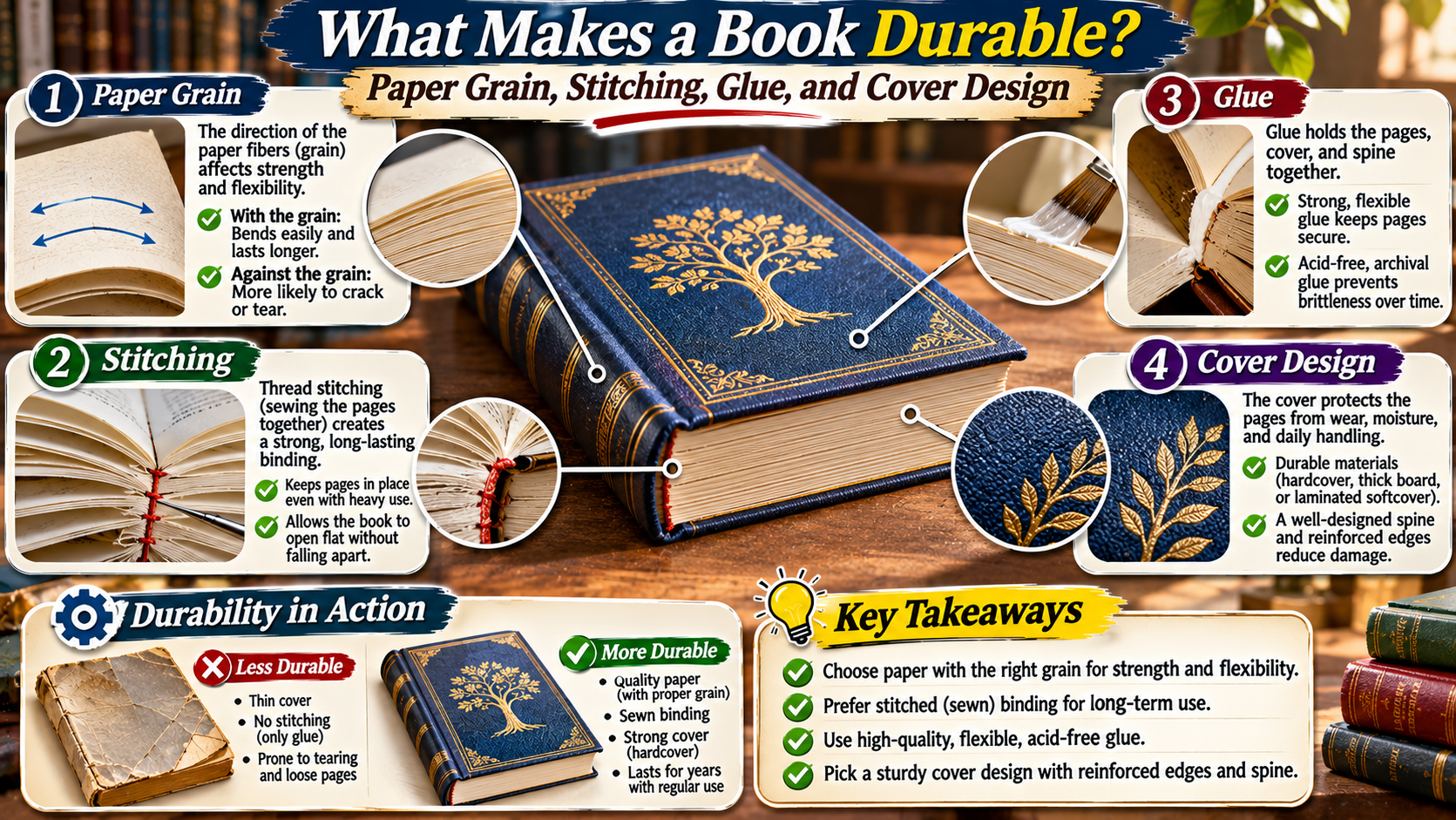
PRINT CRAFT JOURNAL / BOOKBINDING & MATERIAL SCIENCE The Hidden Engineering of a Long-Lasting Book Discover how paper grain, stitching, adhesives, spine construction, and protective covers determine whether a book survives years of reading. PAPER GRAIN SEWN BINDING ADHESIVES COVER DESIGN Some books remain in excellent condition after decades of use, while others begin losing … Read more
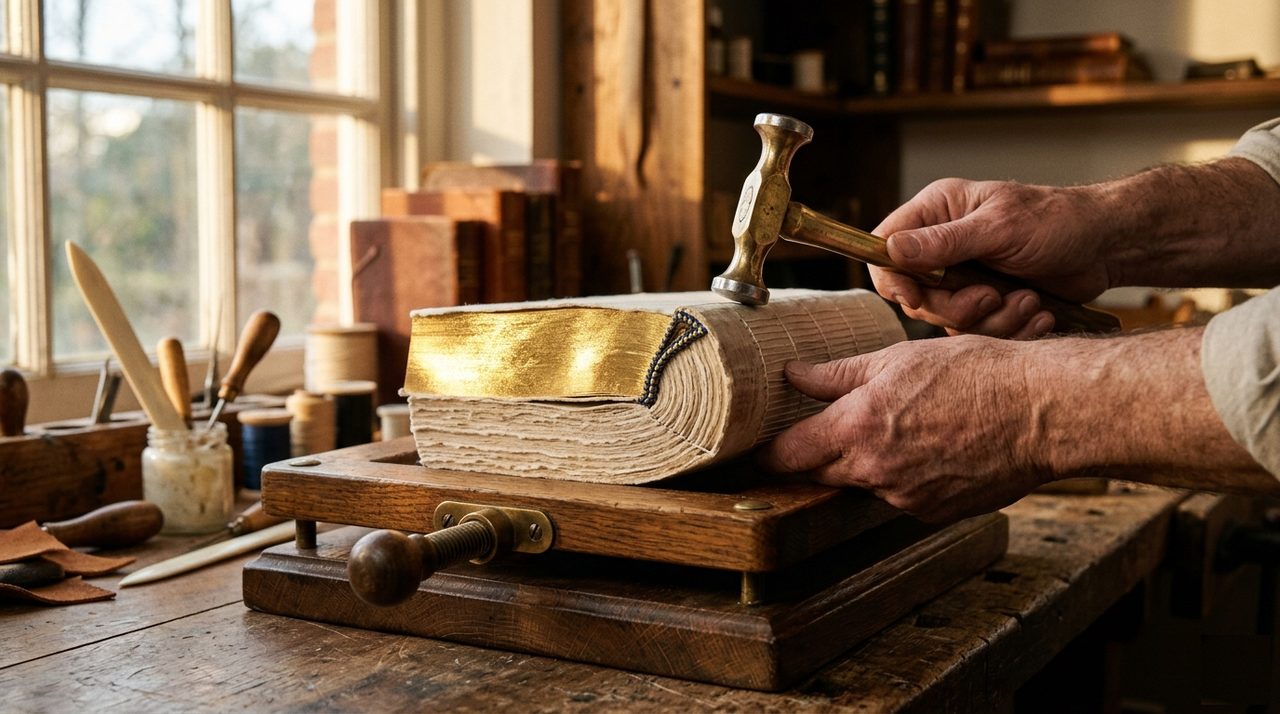
Cover Construction and Finishing: Full Leather, Bookcloth Casing, and Gold Tooling

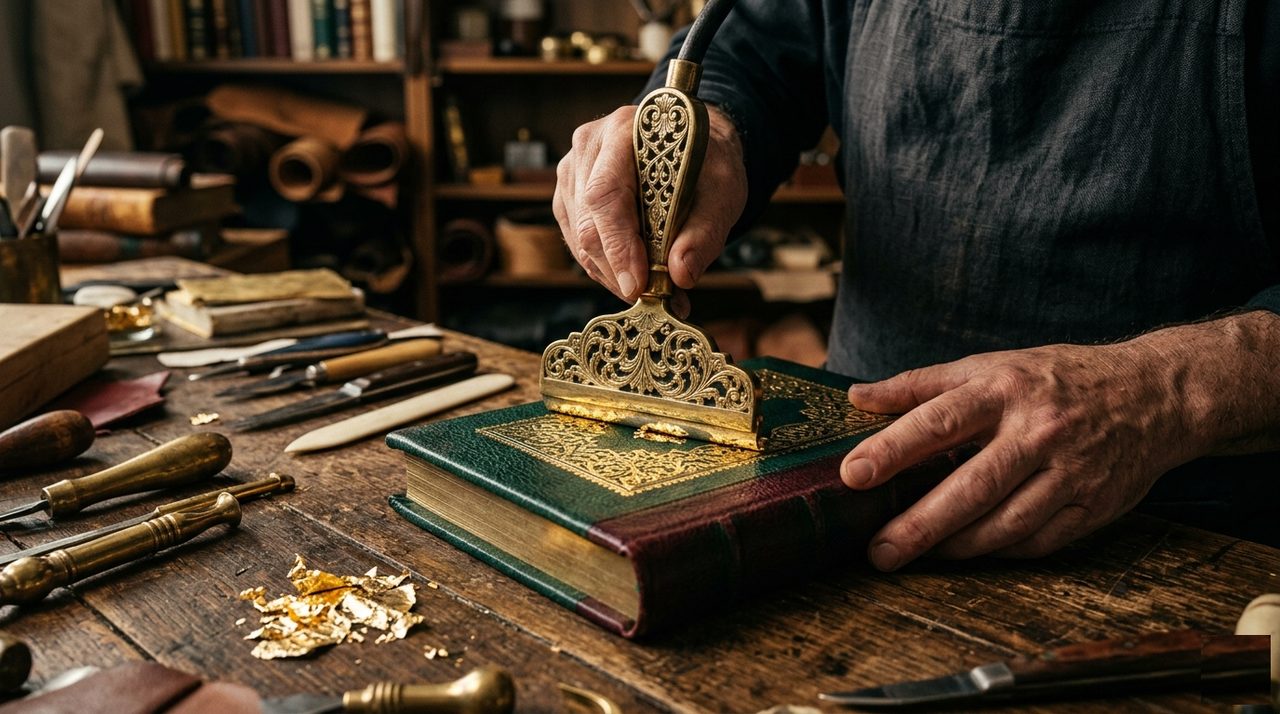
The final, crowning chapter in bookmaking is the creation, attachment, and artisanal decoration of the book’s outer protective enclosure: cover construction and finishing. A book’s cover must fulfill two conflicting architectural demands: it must be rigid and durable enough to protect delicate interior leaves from physical impact, sunlight, and humidity fluctuations, yet possess supple, flexible … Read more

Textblock Forwarding: Rounding, Backing, Edge Gilding, and Headband Weaving

In the lexicon of classical craft bookbinding, the entire progression of operations that transforms a raw, freshly sewn textblock into a structurally sound, shaped, and board-attached volume prior to cover decoration is known as forwarding (distinguished from ‘finishing’, which refers to the exterior leather tooling, gilding, and lettering of the cover). Forwarding is the engineering … Read more

Traditional Bookbinding Sewing Structures: Coptic, Supported Bands, and French Link

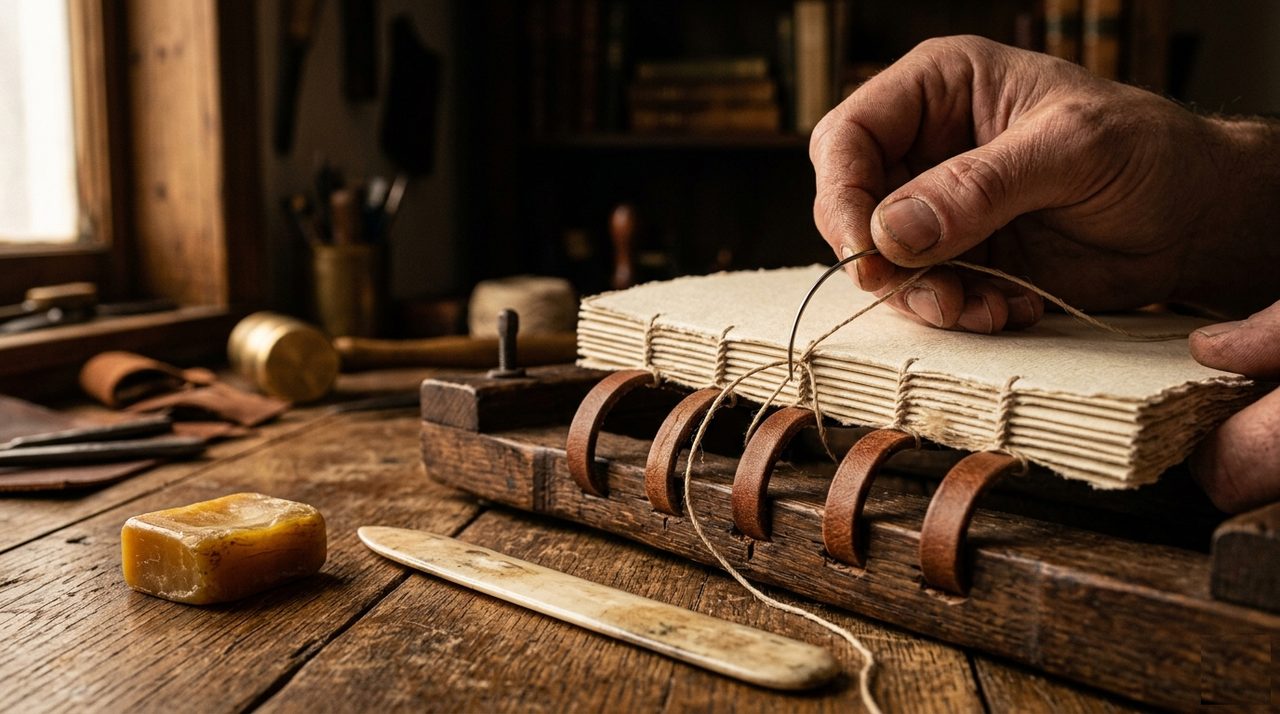
At the structural core of every handcrafted hardbound codex lies its sewing structure. While modern commercial mass-market paperbacks rely upon synthetic hot-melt adhesives (perfect binding) that inevitably brittle and lose single leaves after a few years of handling, traditional bookbinding unites signatures with high-tensile unbleached linen thread drawn through pierced sewing holes in the signature … Read more

Anatomy of the Book: Imposition Geometry, Signature Folding, and Collation

The codex—the familiar bound rectangular volume composed of folded sheets sewn together along one spine edge—is widely regarded as one of the most durable, ergonomically flawless technological architectures in human civilization. Replacing ancient papyrus scrolls and wax tablets in the late Roman Empire, the codex introduced random-access reading, simultaneous front-and-back page writing, protective cover enclosures, … Read more