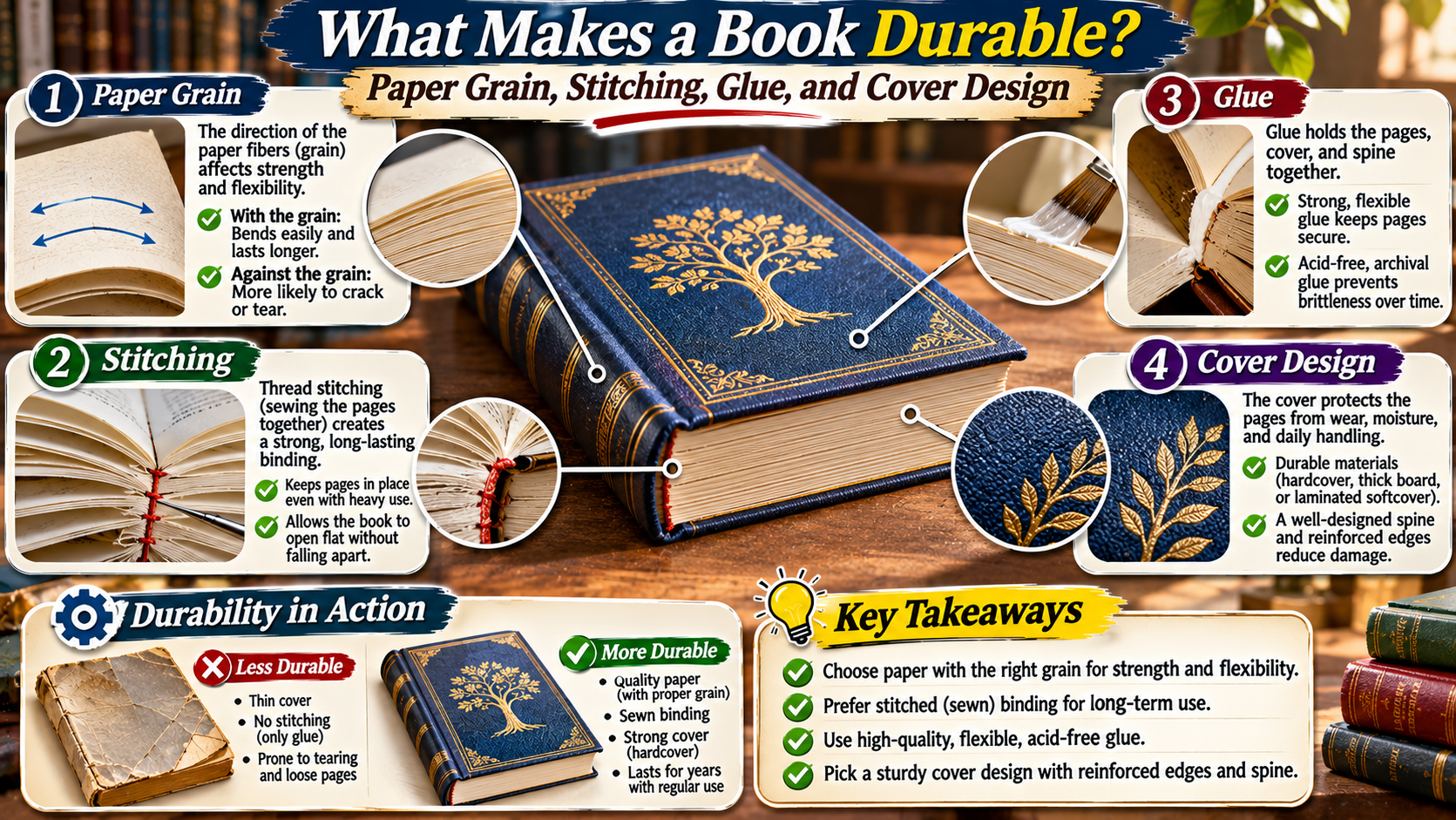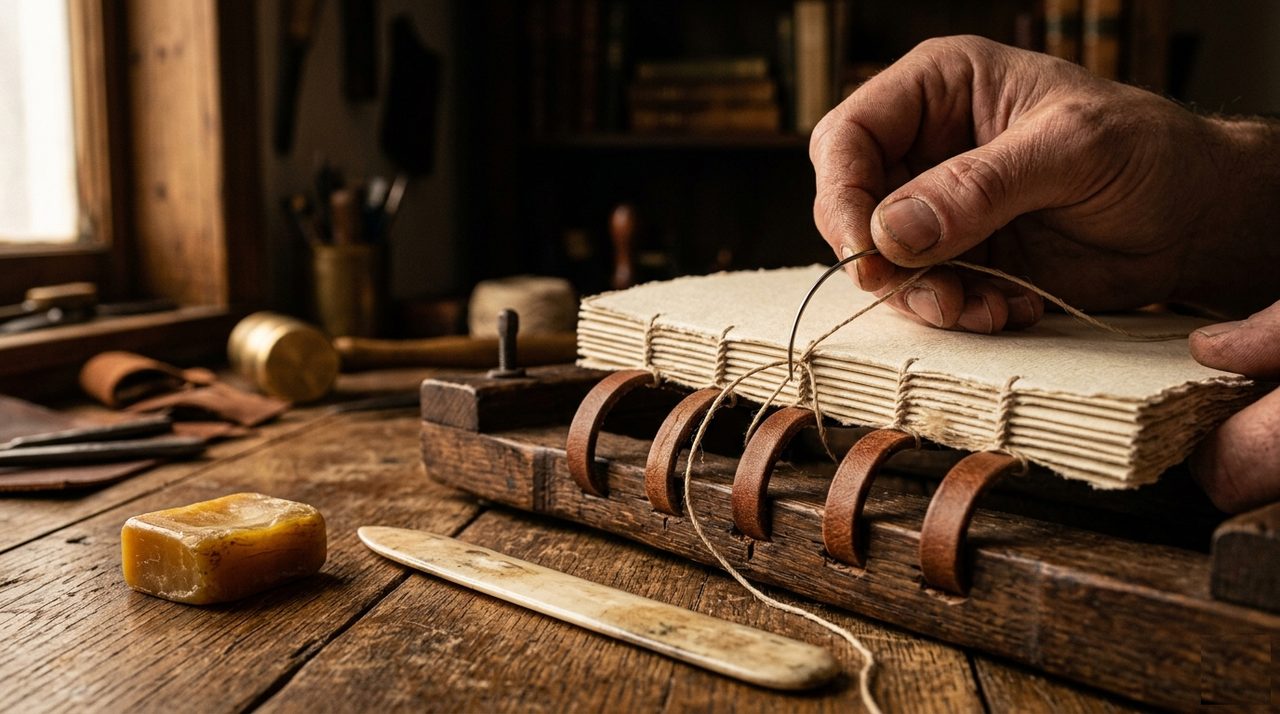
At the structural core of every handcrafted hardbound codex lies its sewing structure. While modern commercial mass-market paperbacks rely upon synthetic hot-melt adhesives (perfect binding) that inevitably brittle and lose single leaves after a few years of handling, traditional bookbinding unites signatures with high-tensile unbleached linen thread drawn through pierced sewing holes in the signature folds. The choice of sewing structure dictates the fundamental mechanical personality of the book: its opening drape, arching spine throw-up, tensile durability, and conservational longevity across centuries.
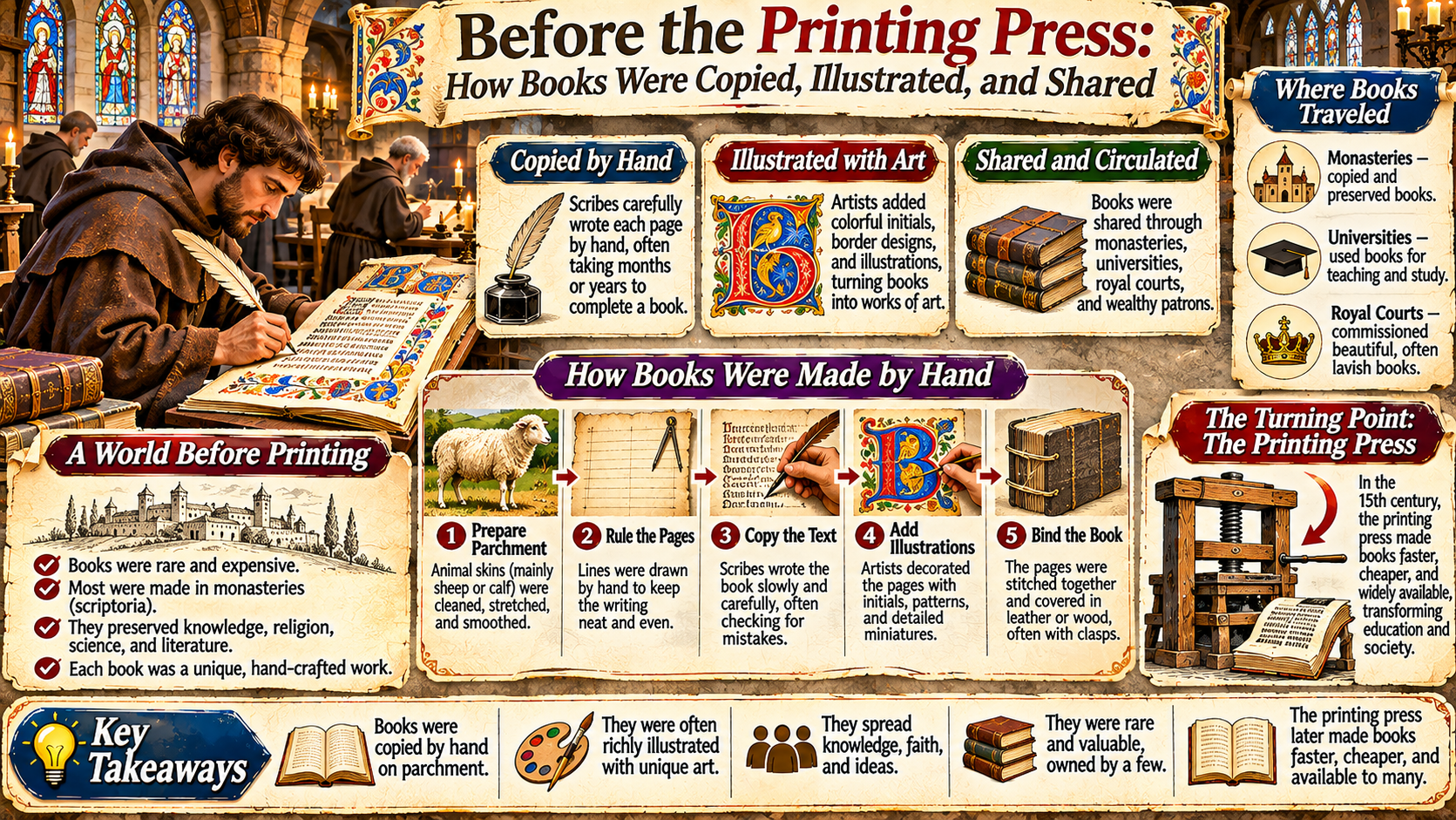
Historically, sewing methodologies evolved across cultures to accommodate diverse writing supports—from the thick, stiff parchment and vellum of early monastic codices to the pliable rag papers of the Renaissance and modern archival cotton book papers. Mastery of traditional sewing encompasses unsupported chain-stitch structures, supported sewing on raised hemp cords, and flexible sewing on flat woven linen tapes.
Comparative Analysis of Classical Sewing Architectures
Bookbinding history showcases diverse engineering solutions for uniting folded leaves into a cohesive opening textblock:
Thread Mechanics, Piercing Geometry, and Tension Calibration
To construct a structurally sound textblock, the bookbinder must calibrate thread caliper to the paper weight. Utilizing thread that is too thick introduces excessive swell—a wedge-shaped thickening of the spine caused by the physical volume of thread accumulating inside each fold, making the spine twice as thick as the fore-edge. Conversely, thread that is too thin tears through the paper fibers under tension. Master binders utilize unbleached, long-staple Irish or French linen thread (sizes 18/3, 25/3, or 35/3), lightly drawn through a cake of pure beeswax to lubricate the fibers and prevent knotting.
Sewing stations are pierced from the inside of each signature fold using a sharp bone-handled awl. During sewing, the binder maintains a calibrated, uniform tension: pulling thread parallel to the signature fold rather than perpendicular (which cuts the paper like a wire cheese-slicer). The resulting sewn textblock forms a flexible, elastic, and mechanically sound block ready for the forwarding bench.
Tensile Crystallinity and Viscoelasticity of Unbleached Flax Linen
The structural longevity of a hand-sewn codex across centuries depends entirely upon the polymer physics of the sewing thread. While modern industrial binders use synthetic polyester or nylon threads, archival fine binders rely strictly on unbleached long-staple flax linen thread (Linum usitatissimum).
Flax fibers possess a high degree of crystalline orientation—exceeding 70% crystallinity along the cellulose polymer axis—giving linen a tensile strength superior to cotton, wool, and silk. Unlike synthetic fibers, linen possesses very low elastic stretch (under 2% elongation at break). When a book is sewn on linen thread, the textblock remains dimensionally stable under tension, resisting the sagging and loose rattling that plagues synthetic threads. Furthermore, treating linen thread with pure unbleached beeswax lubricates the fiber bundles, fills interstitial voids to prevent moisture absorption, and increases inter-fiber friction, locking each stitch securely without unraveling.
Kettle Stitch Tensile Dynamics and Signature Swell Management
The structural integrity of the entire textblock is anchored at the head and tail by the kettle stitch. At each change of direction, the binder passes the needle under the thread connecting the two previous signatures, forming a self-locking half-hitch chain stitch. The kettle stitch absorbs the vertical tensile stresses that occur when a book is stood upright on a shelf, preventing individual signatures from sliding downward under gravity.
Simultaneously, the binder must continuously monitor signature swell. Every pass of thread adds physical thickness inside the signature fold. To prevent the spine from swelling into an uncontrollable wedge, binders employ three mechanical techniques: tapping the sewn folds gently with a wooden bone folder between signatures to compact the paper fibers, utilizing a smaller thread gauge for high-signature volumes, or alternating sewing stations (‘two-on sewing’, where a single length of thread alternates between two adjacent signatures across a single pass).
Archival Bookbinding Standards, Adhesive Chemistry, and Preservation
Archival bookbinding and conservation are governed by the strict standards of the American Institute for Conservation (AIC) and the International Federation of Library Associations (IFLA). A primary directive of archival binding is chemical reversibility: any adhesive, paper lining, or sewing structure applied to a book must be completely removable in the future using benign solvents (such as cold or warm water) without damaging the original textblock fibers.
Furthermore, rare book conservators combat the historic scourge of red rot—the chemical breakdown of 19th-century vegetable-tanned leather caused by residual sulfur dioxide pollutants forming sulfuric acid inside the leather pores. Conservators treat affected leathers with buffer solutions of potassium lactate or non-aqueous Klucel G consolidants, stabilizing the leather matrix and extending the life of antiquarian bindings.
Frequently Asked Questions on Bookbinding and Conservation
Why is paper grain direction critical in bookbinding?
Paper is composed of cellulose fibers that expand significantly in width (up to 15%) when absorbing moisture, but barely at all in length. When paper is folded with the grain, the fibers bend naturally and lay flat. In bookbinding, the paper grain must run parallel to the spine. If the grain runs perpendicular to the spine, the book will resist opening flat, the pages will feel stiff and board-like, and ambient humidity fluctuations will cause the spine to buckle and cockle uncontrollably.
What is the structural purpose of rounding and backing a book?
Rounding taps the flat spine into a semicircular arch, which counteracts the book’s natural tendency to sag forward and become concave over years of shelf storage. Backing hammers the outer signature folds outward at a 90-degree angle, creating distinct ledges or ‘shoulders’. These shoulders accommodate the thickness of the cover boards flush with the spine, providing a solid mechanical hinge that absorbs the opening torque of heavy covers without tearing the paper joints.
What causes ‘swell’ in a sewn textblock, and how is it managed?
Swell is the physical thickening of the spine caused by the accumulated bulk of the sewing thread inside each signature fold. If unmanaged, the spine becomes significantly thicker than the fore-edge, resulting in a wedge-shaped textblock that cannot be properly backed. Binders manage swell by gently compressing the folds with a bone folder between signatures, choosing a thread diameter matched to the signature paper weight, or using ‘two-on sewing’ to halve the amount of thread in each fold.
How does gold tooling bond genuine gold leaf to leather bindings?
Gold tooling relies upon a biological adhesive called glaire (fermented egg white albumin). The binder brushes glaire onto the leather, lays delicate 23-karat gold leaf over the area, and presses a heated brass tool (around 100°C) firmly into the leather. The heat instantly denatures the albumin proteins, fusing the gold permanently into the impressions. Surplus unheated gold is wiped away with a soft rubber pad, leaving gleaming, permanent gold impressions.
The Structural Evolution from Wooden Boards to Laced-In Millboard
The historical evolution of supported sewing structures is inextricably bound to the materials used for the book’s outer boards. In early Romanesque and Gothic monastic bindings (10th to 15th centuries), bookbinders utilized heavy wooden boards cleft from quarter-sawn oak or beech. The thick hemp sewing cords were drawn through tunnel channels chiseled into the edges of the wooden boards and locked firmly in place with tapered oak pegs.
In the sixteenth century, the widespread availability of paper led to the invention of pasteboard and rope millboard—dense, smooth boards manufactured from macerated scrap paper and unbleached hemp ropes. Instead of pegging, the binder frayed out the ends of the hemp sewing cords into fine fibers (‘slips’), pasted them with wheat starch, and laced them through pierced holes in the millboard in a zigzag pattern, hammering the joints smooth. This laced-in board attachment created an extraordinarily tough, flexible mechanical hinge that remains the hallmark of supreme fine binding to this day.
Sewing on Split Tapes: The Engineering of Municipal Ledger Bindings
In late nineteenth-century commercial stationery binding, municipal clerks and banking houses required massive ledger volumes capable of holding thousands of pages of accounting records. These monumental blank books had to withstand decades of daily desk slamming and lay 100% flat at any page opening.
Binders solved this mechanical challenge through sewing on split linen tapes with specialized spring-back spine construction. Heavy linen tapes were sewn through reinforced linen joints in the signature folds. The protruding ends of the tapes were clamped and glued between the laminated layers of a split binder’s board. Combined with a curved spring-steel or laminated pasteboard spine tube, the open ledger arched upward with an energetic snap (‘spring back’), elevating the gutter leaves completely flat so that clerks could write comfortably right to the very edge of the inner margin.
Thread Selection Protocols and Wax Lubrication Chemistry
Archival bookbinders reject commercial synthetic thread in favor of natural long-staple Irish flax thread. Flax fibers possess crystalline cellulose polymers with zero elasticity memory, ensuring that signatures remain bound with uniform tension over centuries. Prior to sewing, the thread is drawn twice through a solid cake of pure, unrefined natural beeswax.
The beeswax fulfills three crucial engineering functions: it flattens protruding microscopic surface fibrils on the thread, drastically reducing friction as the needle pulls through paper folds; it seals the internal core of the thread against atmospheric moisture and fungal spores; and it provides an adhesive tackiness that locks interlocking kettle stitches into place, preventing tension loss while the binder gathers and pierces subsequent signatures.