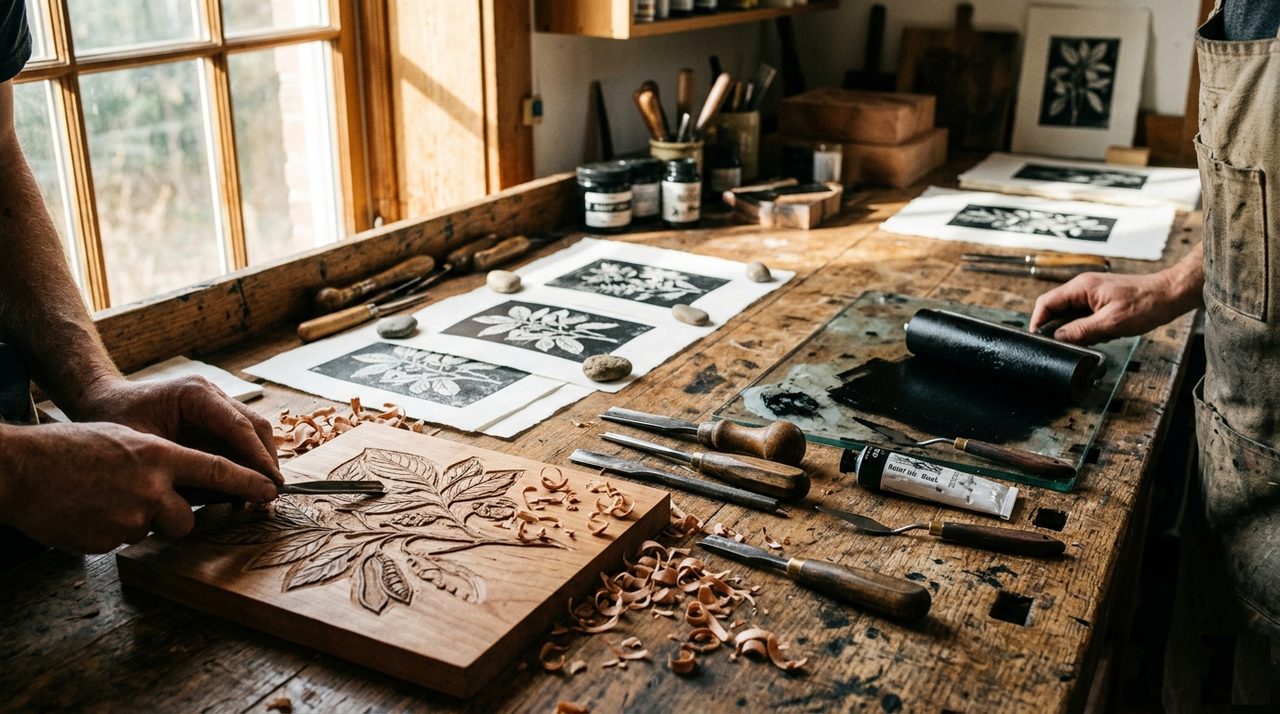
In graphic arts classification, relief printing represents the oldest, most direct, and tactile printing discipline in human history. The operational principle of relief printing is deceptively simple yet mechanically exacting: the image or text to be printed is raised above the non-printing areas of the matrix. When an ink roller passes across the surface, ink adheres exclusively to the elevated relief planes, while the recessed, carved-out hollows remain completely pristine. Under controlled mechanical impression, paper is pressed against the raised face, transferring the ink film directly to the substrate.
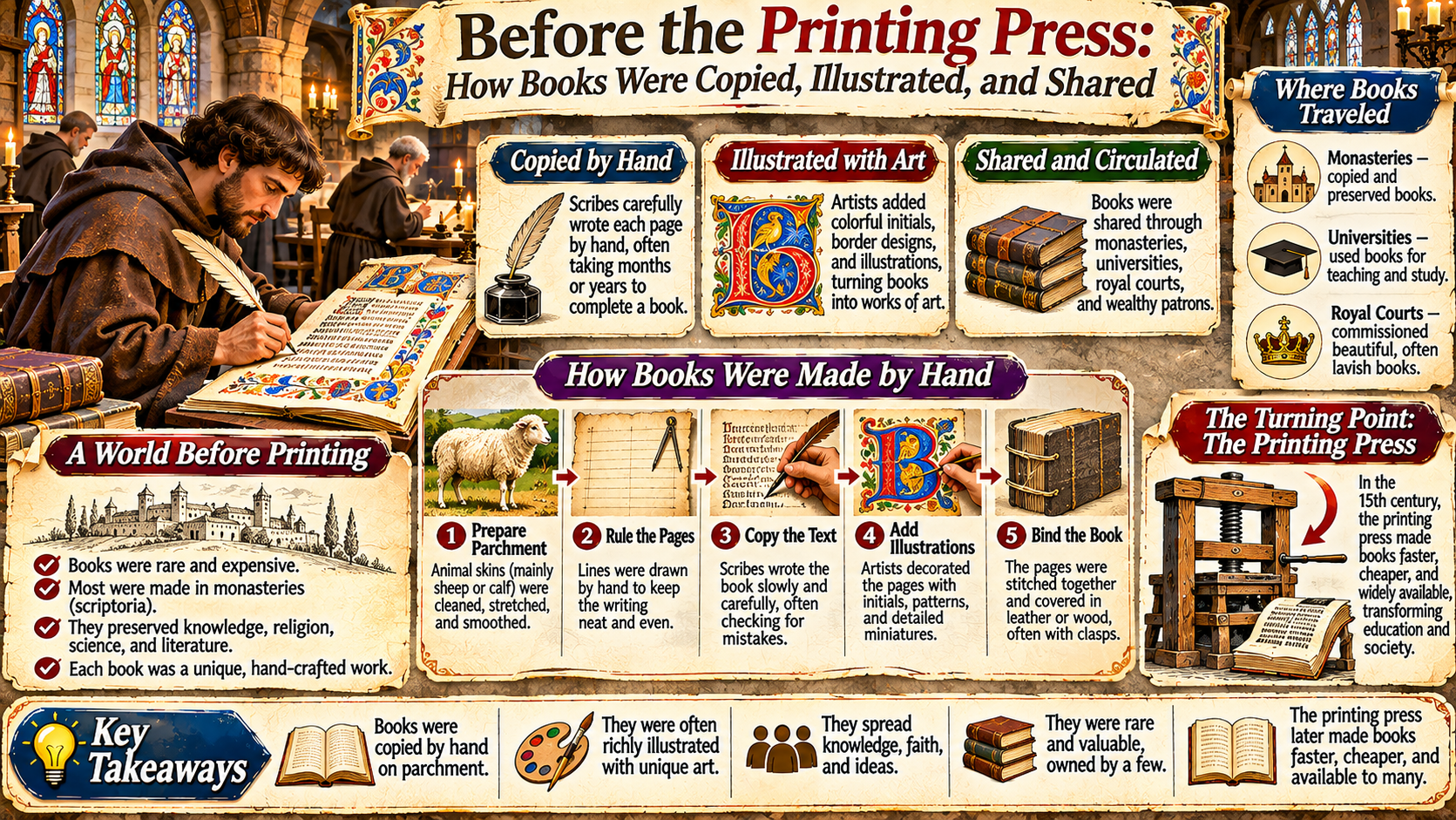
Relief printing encompasses three primary historical and artistic branches: traditional relief woodcuts carved along the longitudinal plank grain; end-grain boxwood wood engravings incised with fine burins; and movable metal letterpress composed of cast lead alloy sorts, brass rules, and photoengraved zinc line blocks. While modern commercial production has largely shifted to planographic and digital methods, relief printing retains unparalleled authority in fine press publishing, artist printmaking, and luxury typographic stationery.
Woodcut vs Wood Engraving: Material Differences and Tooling
A fundamental distinction exists between traditional woodcuts and 18th-century wood engravings, rooted in the orientation of the wood grain and the specialized cutting tools employed by the printmaker:
The Letterpress Impression: Kiss Impression vs Modern Deep Deboss
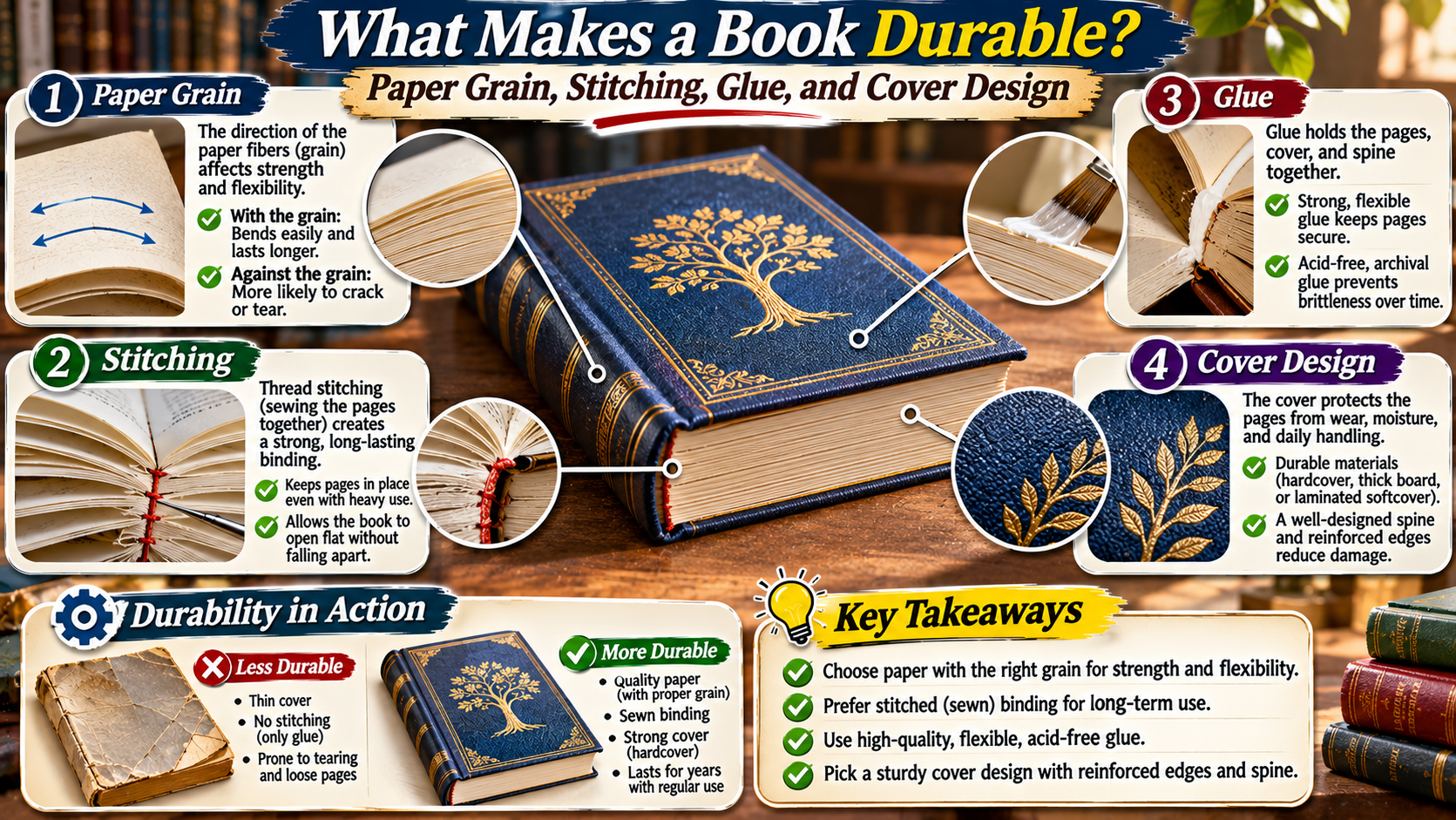
Throughout the classical era of commercial letterpress (from Gutenberg through the mid-20th century), the supreme benchmark of pressmanship was the kiss impression. A master pressman carefully adjusted the hard tympan packing (composed of calibrated oiled manila tympan sheets and hard pressboards) so that the inked metal type touched the paper surface with just enough microscopic pressure to transfer the ink cleanly without leaving any perceptible physical indentation or ridge on the reverse side of the sheet. Indenting the paper was viewed as defective workmanship that prematurely wore out expensive lead type.
Conversely, the 20th-century revival of letterpress as an artisanal luxury medium inverted this historical aesthetic. Modern letterpress practitioners—utilizing photopolymer plates on magnetic metal bases rather than perishable foundry lead—deliberately engineer a deep, tactile deboss (often called a ‘heavy bite’). When printed onto thick, soft, high-cotton rag stocks (such as 300 to 600 gsm Crane’s Lettra), this deep impression creates a sculptural, three-dimensional tactile depth that visually separates artisanal letterpress from flat digital or offset commercial imprints. This tactile embossment celebrates the undeniable physical presence of relief craftsmanship in an increasingly virtual world.
Cellular Microstructure and Shear Resistance of End-Grain Boxwood
The artistic and technical superiority of end-grain wood engraving over plank woodcuts is governed by the cellular morphology of timber. In a plank woodcut cut along the trunk (longitudinal grain), the wood consists of elongated, hollow vascular tracheids running parallel to the surface. When an artist cuts across this grain, the wood fibers tear, splinter, and yield unevenly, restricting lines to relatively coarse widths.
End-grain wood engraving, pioneered by Thomas Bewick in the late 18th century, utilizes slow-growing European boxwood (Buxus sempervirens) cut perpendicular to the trunk like a wheel slice. In this orientation, the printmaker carves into the ends of millions of densely packed, thick-walled cellular tubules. The end-grain exhibits uniform shear resistance in all 360 degrees of direction, with a Janka hardness rating exceeding 2,800 lbf. Steel burins and gravers glide smoothly without grain deflection, allowing the engraver to incise white lines spaced less than 0.1 mm apart, capturing microscopic tonal chiaroscuro rivaling steel plate engravings.
Stress Concentration and Edge-Bevel Physics in Photopolymer Plates
In contemporary fine-press letterpress, traditional lead type has been widely augmented by photopolymer relief plates mounted on precision-ground magnetic steel or aluminum bases (such as the Bunting or Boxcar base). Photopolymer plates consist of an ultraviolet-curable polyester or polyamide polymer bonded to an aluminum or steel backing.
When exposed through a high-contrast film negative to 365 nm UV light, radical photoinitiators initiate rapid polymer chain cross-linking, solidifying the exposed image areas. A critical mechanical parameter is the relief shoulder angle. If the relief shoulder drops vertically at 90 degrees, fine typographic serifs buckle under printing impression. Photopolymer plates are engineered with an optimal 65- to 70-degree shoulder bevel, which provides structural reinforcement to the microscopic relief faces, preventing dot buckling under deep deboss impression pressures exceeding 400 psi.
Quality Control Standards, Press Calibration, and Ink Rheology
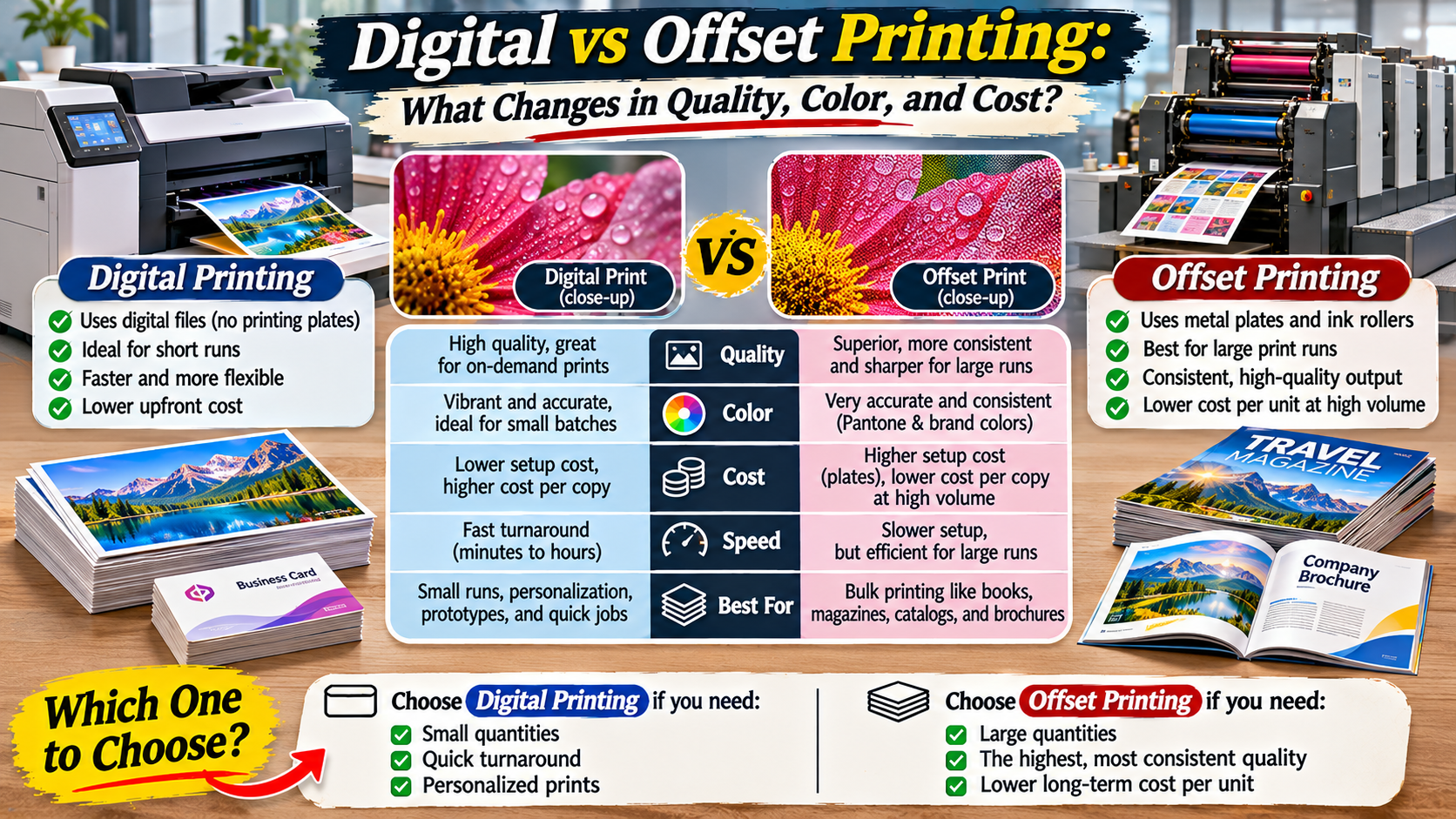
In fine art printmaking and commercial print reproduction, process reliability is governed by international technical standards. For relief and planographic printing, the International Organization for Standardization established ISO 12647-2, which defines target solid ink densities (SID), dot gain curves (TVI – Tone Value Increase), and colorimetric Lab values across standard commercial paper stocks:
In all printing workshops, solvent management and environmental health are governed by OSHA and REACH chemical regulations. Printmakers increasingly deploy low-VOC, vegetable-based ester solvents and water-washable oil inks, which eliminate toxic petroleum distillates while preserving the exquisite tonal fidelity of traditional printmaking.
Frequently Asked Questions on Printing Methods and Technology
What is the difference between relief, intaglio, and planographic printing?
Relief printing prints from a raised surface (the high areas receive ink while carved hollows remain dry, as in woodcuts and letterpress). Intaglio printing prints from recessed grooves (ink is wiped into engraved or etched channels below the surface, as in copper etching and photogravure). Planographic printing prints from an entirely flat plane, utilizing the chemical antagonism between grease and water to repel or attract ink without any physical relief (as in stone lithography and offset printing).
Why must paper be dampened prior to intaglio printing but kept dry for offset lithography?
Intaglio printing requires dampened paper because water acts as a plasticizer, swelling and softening the cellulose fibers so they become pliable enough to be forced deep into microscopic etched grooves under high roller pressure. In offset lithography, paper must remain strictly dry and dimensionally stable: damp paper expands, buckles under the dampening rollers, and misaligns four-color registration while causing ink emulsification.
How does offset printing prevent ink from sticking to the non-image areas of the plate?
Offset printing relies upon a continuous dual-roller inking and dampening system. Before the ink rollers contact the plate, dampening rollers coat the plate with a thin water film containing gum arabic and fountain solution. The chemically prepared non-image areas of the plate are hydrophilic (water-loving) and absorb the water film. When the oleophilic (oil-loving) ink rollers subsequently pass over, the surface tension of the water film repels the oily ink, allowing ink to adhere solely to the dry, greasy image areas.
What role does mesh tension play in multi-color screen printing?
Mesh tension (measured in Newtons per centimeter, N/cm) dictates registration accuracy. If a screen has low or uneven tension, the mesh stretches laterally as the rubber squeegee blade is pulled across it. In a multi-color print job, this stretching causes the second and third color layers to misalign with the first, creating blurred edges and registration gaps. Maintaining uniform tension (20 to 25 N/cm) ensures the mesh snaps cleanly away from the paper without lateral distortion.
The Fine Press Revival: Craft Aesthetics in the Digital Century
The contemporary renaissance of letterpress and relief printing represents a conscious cultural rebellion against the slick, sterile ubiquity of digital screens. In an era where billions of digital texts are consumed and discarded daily without tactile memory, the physical relief print offers an irresistible sensory counterweight: the fragrance of linseed oil and mineral ink, the textured tooth of heavy cotton rag paper, and the subtle, three-dimensional impression stamped into the sheet.
Contemporary private presses—such as the Whittington Press, Barbarian Press, and Arion Press—demonstrate that relief printing remains an active, evolving fine-art discipline. Master printmakers collaborate with living authors, illustrators, and type designers to produce limited-edition portfolio books that are collected by world-class institutional archives. By integrating hand-set metal type with original multi-color end-grain wood engravings, these volumes celebrate the full sensory potential of the book as an integrated physical work of art.
Workshop Tool Maintenance and Boxwood Block Preservation
Preserving woodcut and wood engraving matrices requires rigorous workshop conservation protocols. End-grain boxwood blocks are extraordinarily sensitive to ambient atmospheric conditions. If stored in an environment with fluctuating relative humidity, the wood expands and contracts across its radial cross-section, causing the block to crack, warp, or split along the glue joints of composite blocks.
Printmakers store engraved boxwood blocks wrapped in acid-free tissue paper within humidity-controlled drawers maintained strictly at 50% relative humidity. Following a print run, ink must be cleansed immediately from the fine engraved lines using odorless mineral spirits or rectified spirits of turpentine applied with a natural horsehair brush. Using harsh metal brushes or scraping tools will permanently round off the delicate white-line ridges, ruining the plate’s micro-tonal gradation for future impressions.
Environmental Sustainability: Low-VOC Vegetable Inks and Solvent Washouts
Modern relief print studios are pioneering green printmaking practices designed to safeguard artisan health and environmental biomes. Traditional petroleum-based washup solvents—which release hazardous air pollutants (HAPs) and volatile aromatic hydrocarbons—are increasingly replaced with bio-based solvent substitutes: soybean methyl esters, pure d-limonene (citrus terpene extract), and bio-diesel cleaners.
Furthermore, leading fine-art ink manufacturers (such as Caligo Safe Wash and Cranfield) formulate relief printing inks from pure oxidized linseed oils modified with emulsifying agents. These specialized inks behave with the exact tack, viscosity, and rich pigment loading of traditional oil inks on the press, yet wash up completely with ordinary household liquid soap and warm water, eliminating toxic solvent emissions from the workshop entirely and setting a new benchmark for clean craft stewardship. In addition, preserving historical relief presses provides hands-on educational insights into early industrial mechanics, connecting modern digital typographers with the tactile origins of visual communication.