Copyediting, Proofreading, and Quality Control: The Mechanics of Pre-Press Review
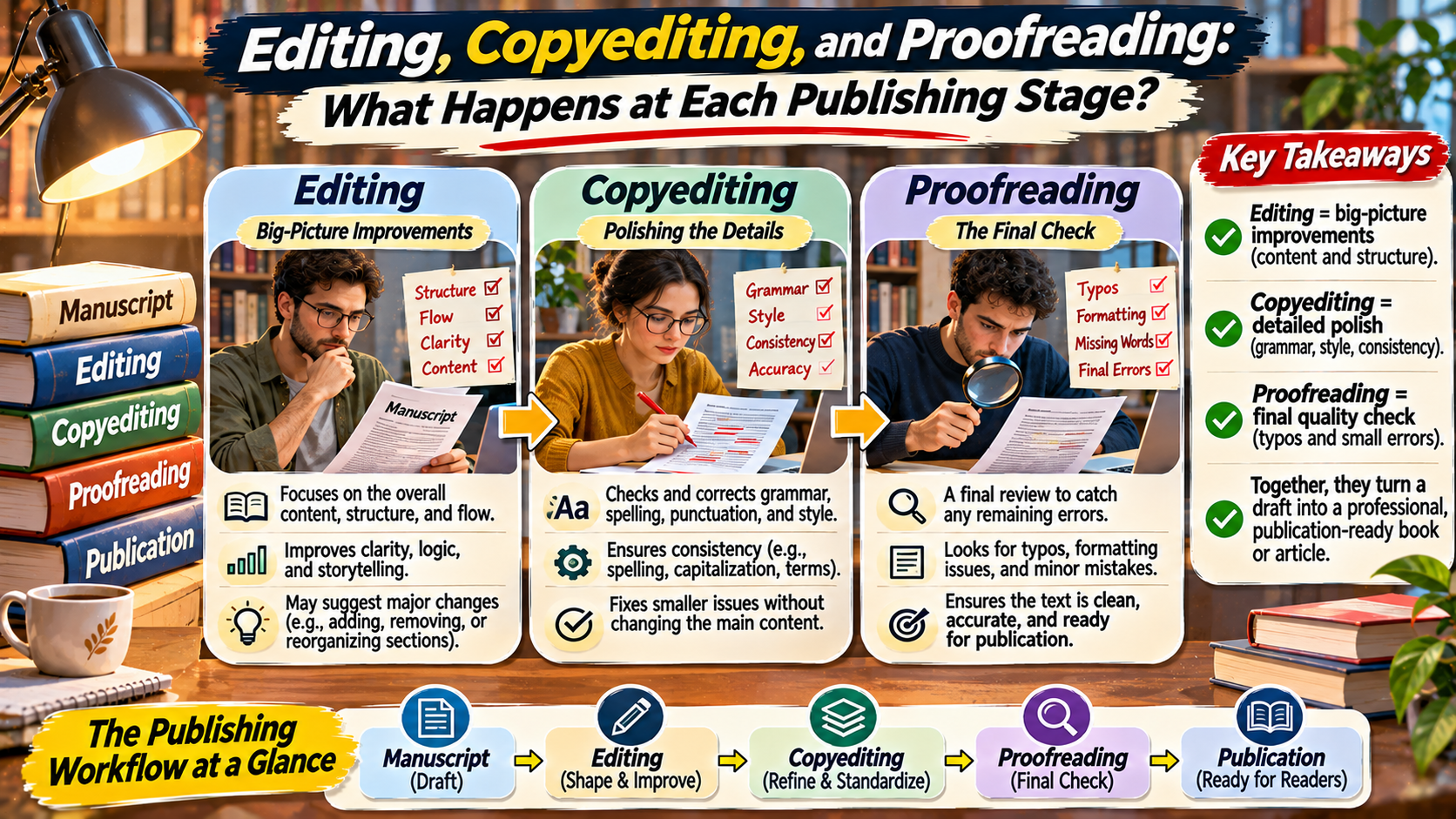
Following the creative revisions of developmental and line editing, the manuscript transitions into the exacting realm of technical quality assurance: copyediting and proofreading. While casual observers frequently conflate these two disciplines, they represent entirely separate operational phases within the publishing pipeline, executed by different specialists utilizing distinct editorial toolsets and criteria. Copyediting represents the final … Read more


The Editorial Manuscript Lifecycle: Acquisitions, Developmental Editing, and Line Editing

Behind every beautifully bound volume residing on a bookstore table or academic library shelf lies an intricate, multi-stage editorial architecture known as the manuscript publishing lifecycle. Far from being a simple mechanical pipeline that converts authorial prose directly into ink on paper, professional publishing is a rigorous intellectual and commercial filtering apparatus designed to shape, … Read more

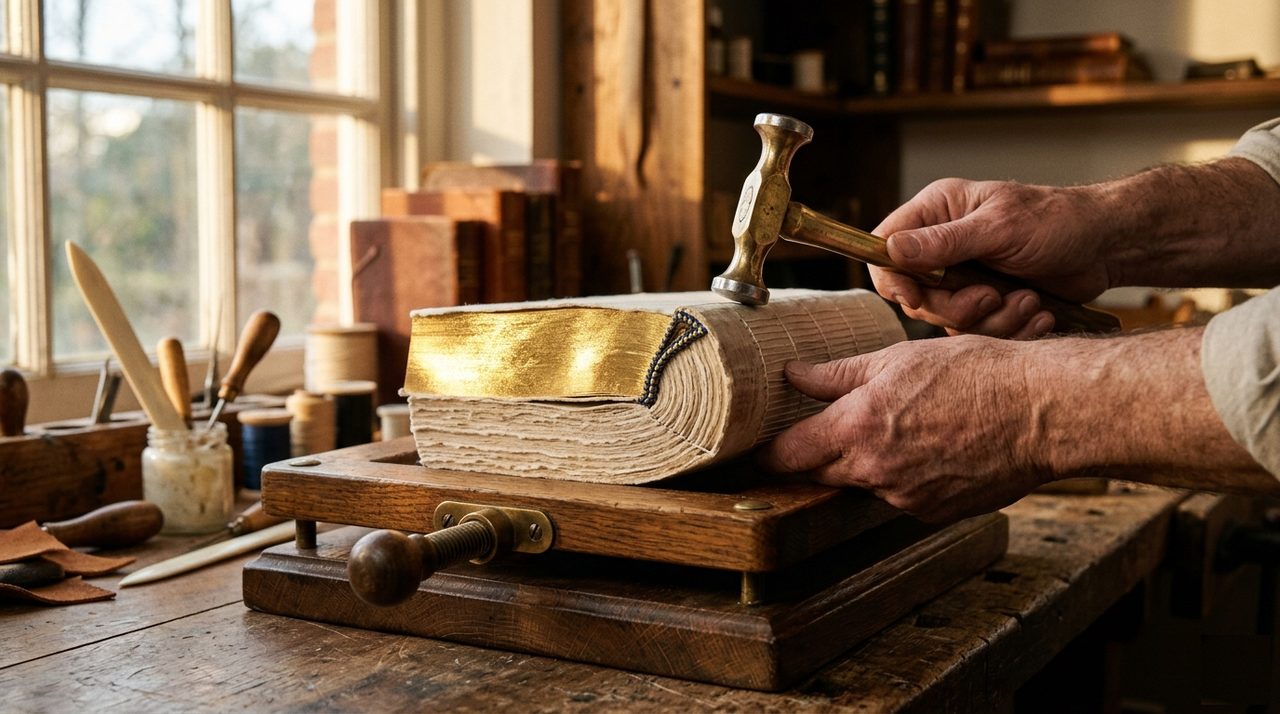
Cover Construction and Finishing: Full Leather, Bookcloth Casing, and Gold Tooling

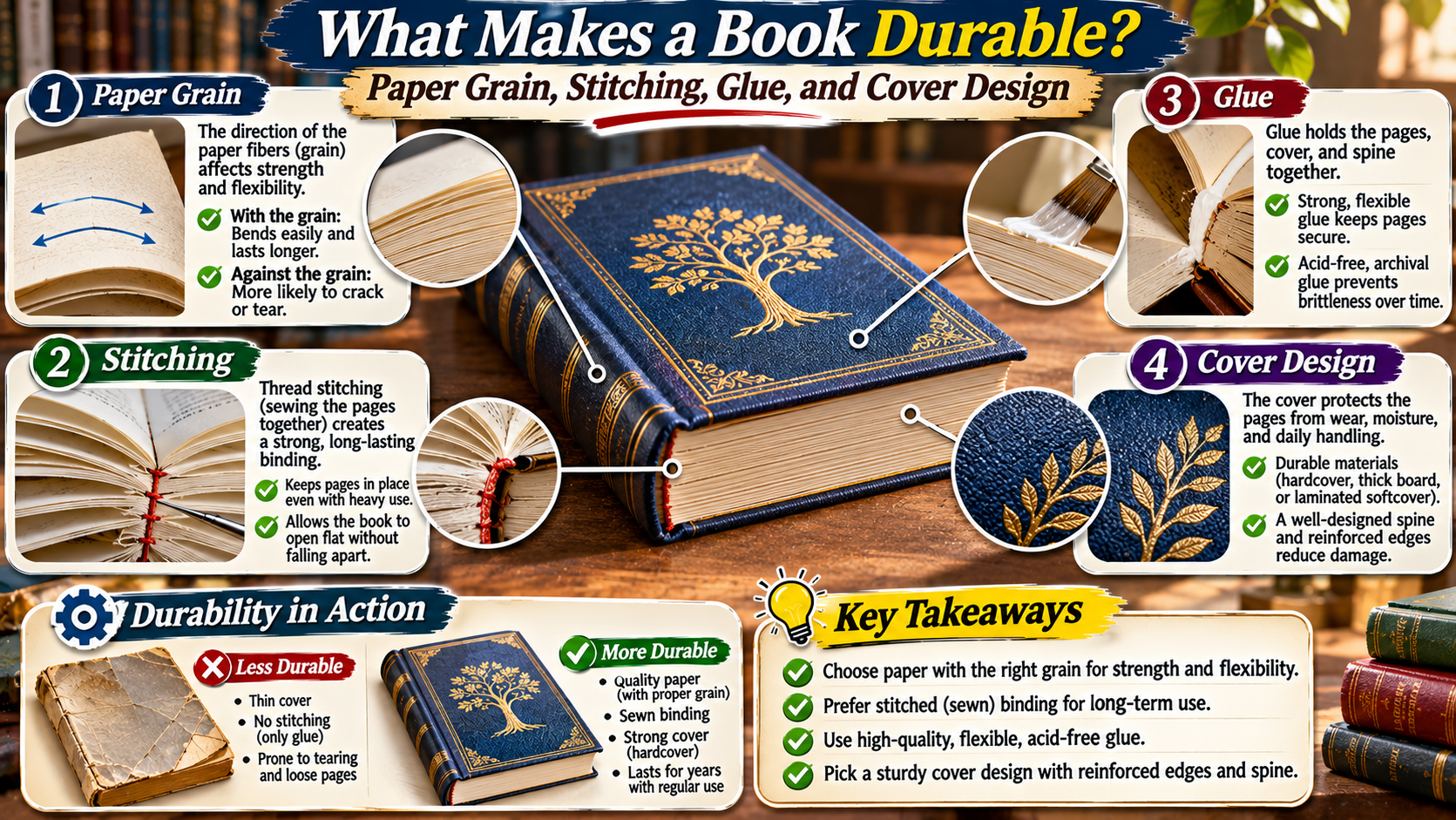
The final, crowning chapter in bookmaking is the creation, attachment, and artisanal decoration of the book’s outer protective enclosure: cover construction and finishing. A book’s cover must fulfill two conflicting architectural demands: it must be rigid and durable enough to protect delicate interior leaves from physical impact, sunlight, and humidity fluctuations, yet possess supple, flexible … Read more

Textblock Forwarding: Rounding, Backing, Edge Gilding, and Headband Weaving

In the lexicon of classical craft bookbinding, the entire progression of operations that transforms a raw, freshly sewn textblock into a structurally sound, shaped, and board-attached volume prior to cover decoration is known as forwarding (distinguished from ‘finishing’, which refers to the exterior leather tooling, gilding, and lettering of the cover). Forwarding is the engineering … Read more

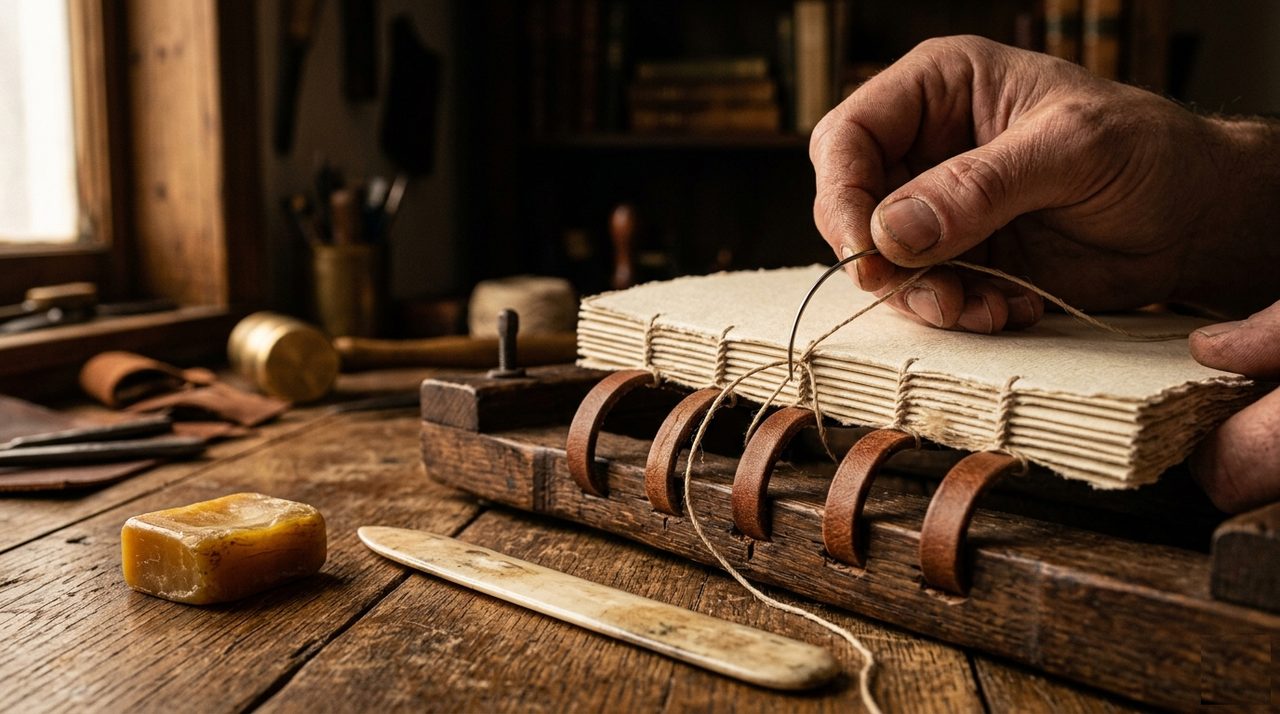
Traditional Bookbinding Sewing Structures: Coptic, Supported Bands, and French Link

At the structural core of every handcrafted hardbound codex lies its sewing structure. While modern commercial mass-market paperbacks rely upon synthetic hot-melt adhesives (perfect binding) that inevitably brittle and lose single leaves after a few years of handling, traditional bookbinding unites signatures with high-tensile unbleached linen thread drawn through pierced sewing holes in the signature … Read more

Anatomy of the Book: Imposition Geometry, Signature Folding, and Collation

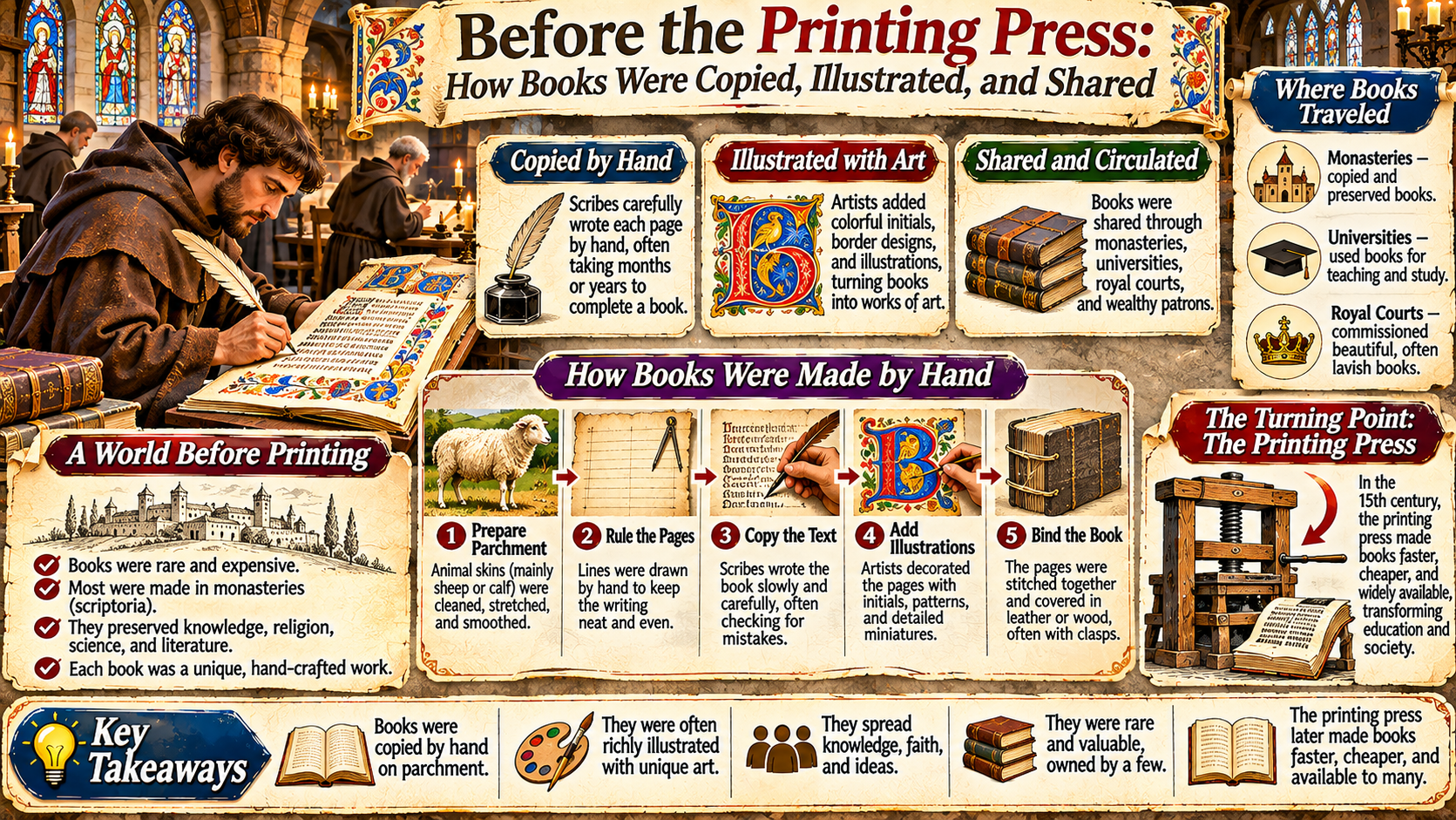
The codex—the familiar bound rectangular volume composed of folded sheets sewn together along one spine edge—is widely regarded as one of the most durable, ergonomically flawless technological architectures in human civilization. Replacing ancient papyrus scrolls and wax tablets in the late Roman Empire, the codex introduced random-access reading, simultaneous front-and-back page writing, protective cover enclosures, … Read more

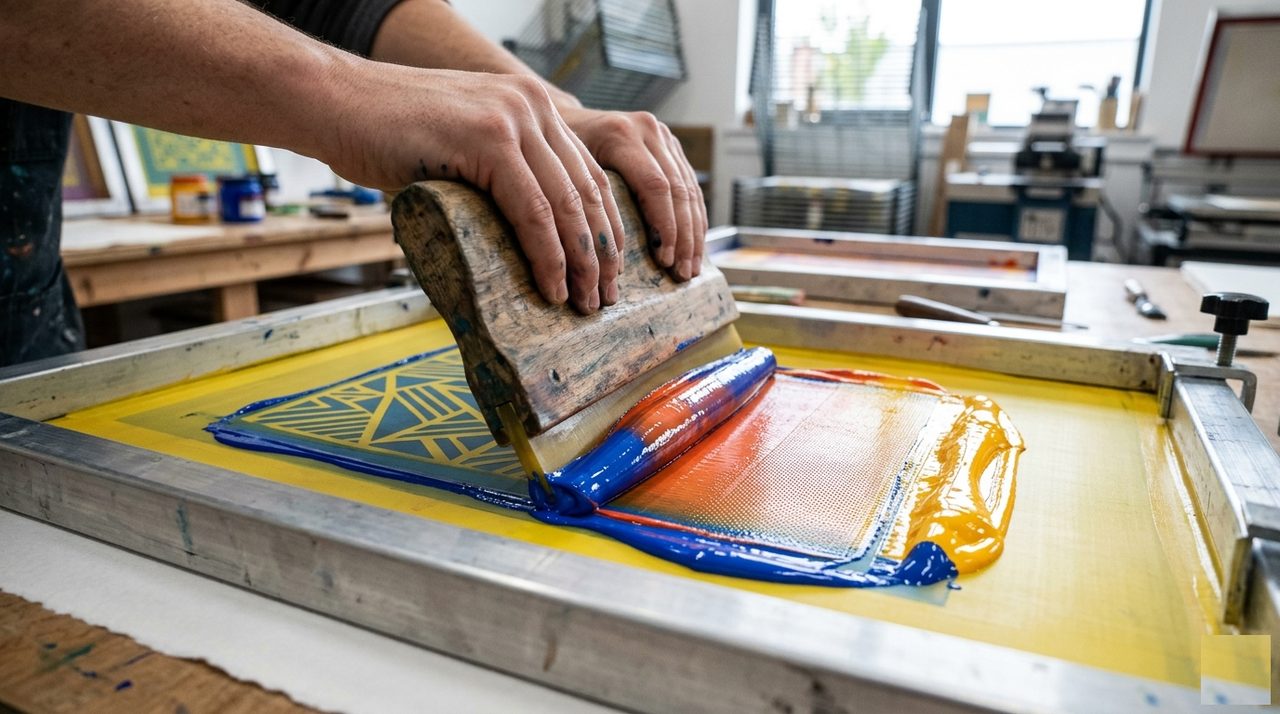
Screen Printing and Serigraphy: Stencil Mesh Tension, Squeegee Physics, and Inks

Among the major historical printing disciplines, screen printing (historically termed serigraphy when practiced in fine arts, from the Greek serikos, meaning silk, and grapho, to write) is uniquely distinct: it is a stencil-based, through-the-matrix process. Rather than pressing paper against an inked raised relief, recessed groove, or planographic surface, screen printing forces viscous fluid ink … Read more

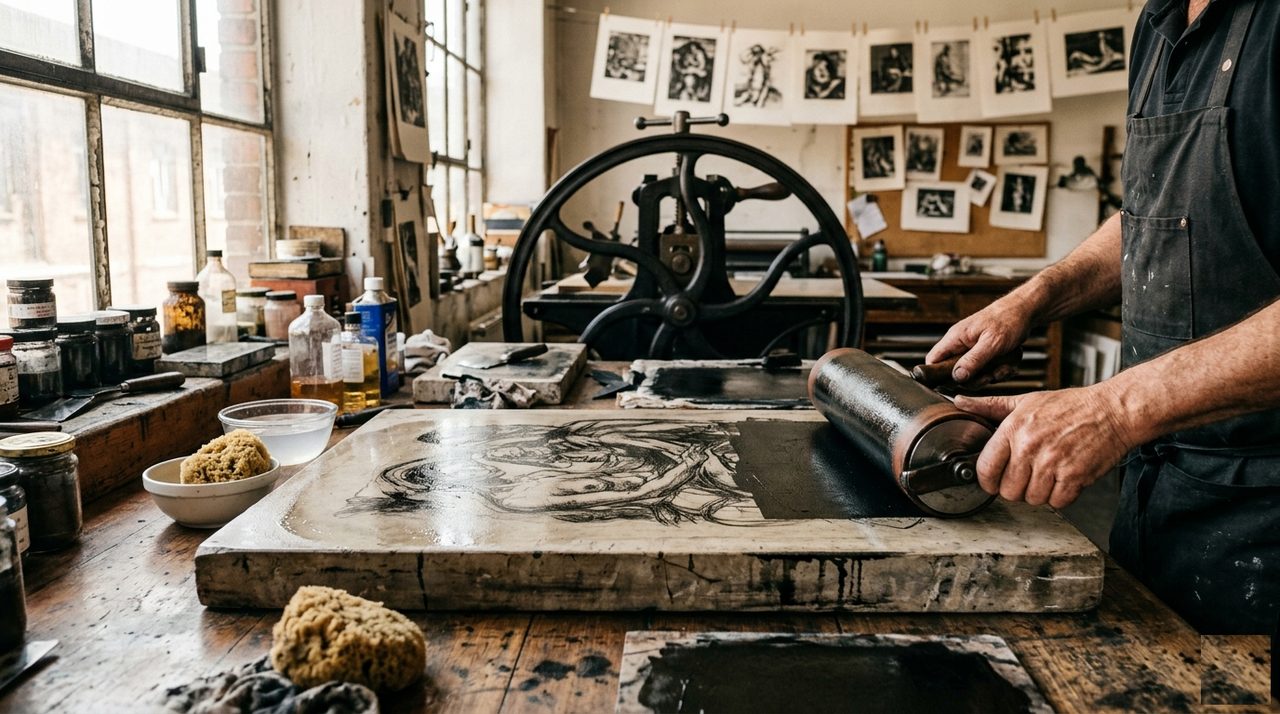
Planographic Lithography: Alois Senefelder, Chemical Antagonism, and Modern Offset

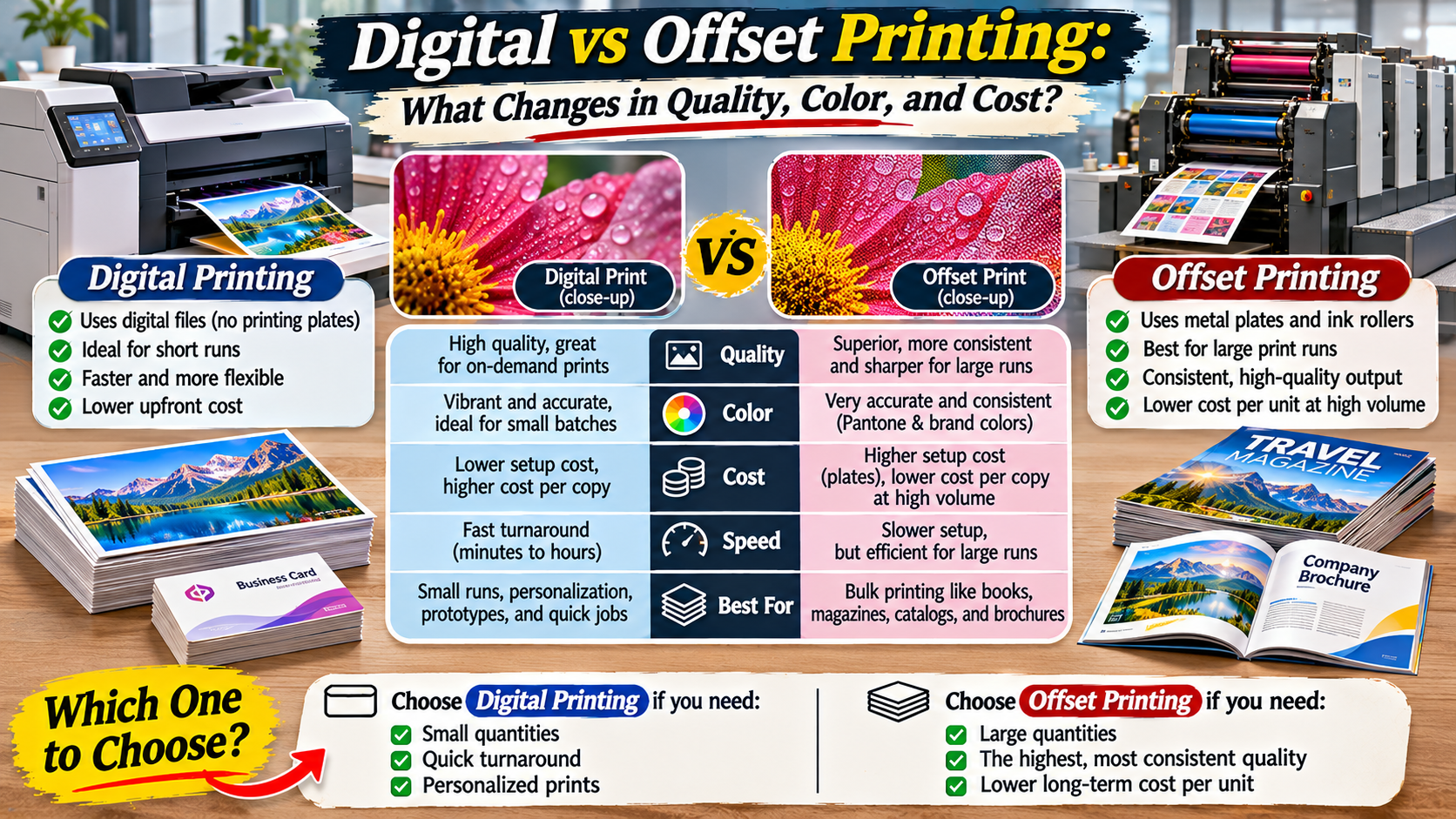
Unlike relief printing (which prints from raised surfaces) or intaglio printing (which prints from recessed grooves), lithography is fundamentally planographic—it prints from an entirely flat, non-relief plane. Invented in 1796 in Munich by the aspiring Bavarian playwright Alois Senefelder, lithography bypassed the costly, labor-intensive requirements of carving wood or engraving copper plates. Instead, Senefelder based … Read more

Intaglio Printmaking: Engraving, Etching, Aquatint, and Photogravure

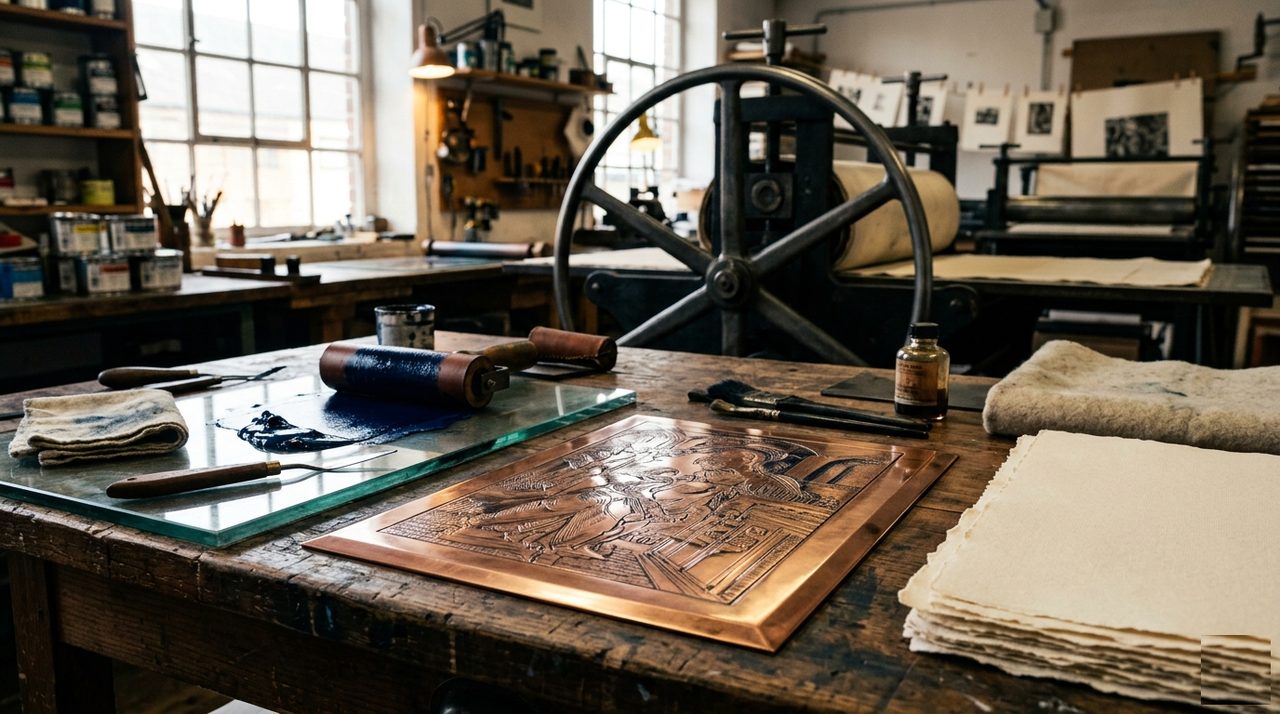
Operating in direct mechanical opposition to relief printing is the noble and rigorous discipline of intaglio printmaking (derived from the Italian verb intagliare, meaning ‘to engrave’ or ‘to carve into’). In intaglio processes, the image is not raised, but rather incised, furrowed, or chemically etched below the polished surface of a metal plate—traditionally copper, zinc, … Read more

Relief Printing Mechanics: Letterpress, Woodcut, and Wood Engraving Traditions

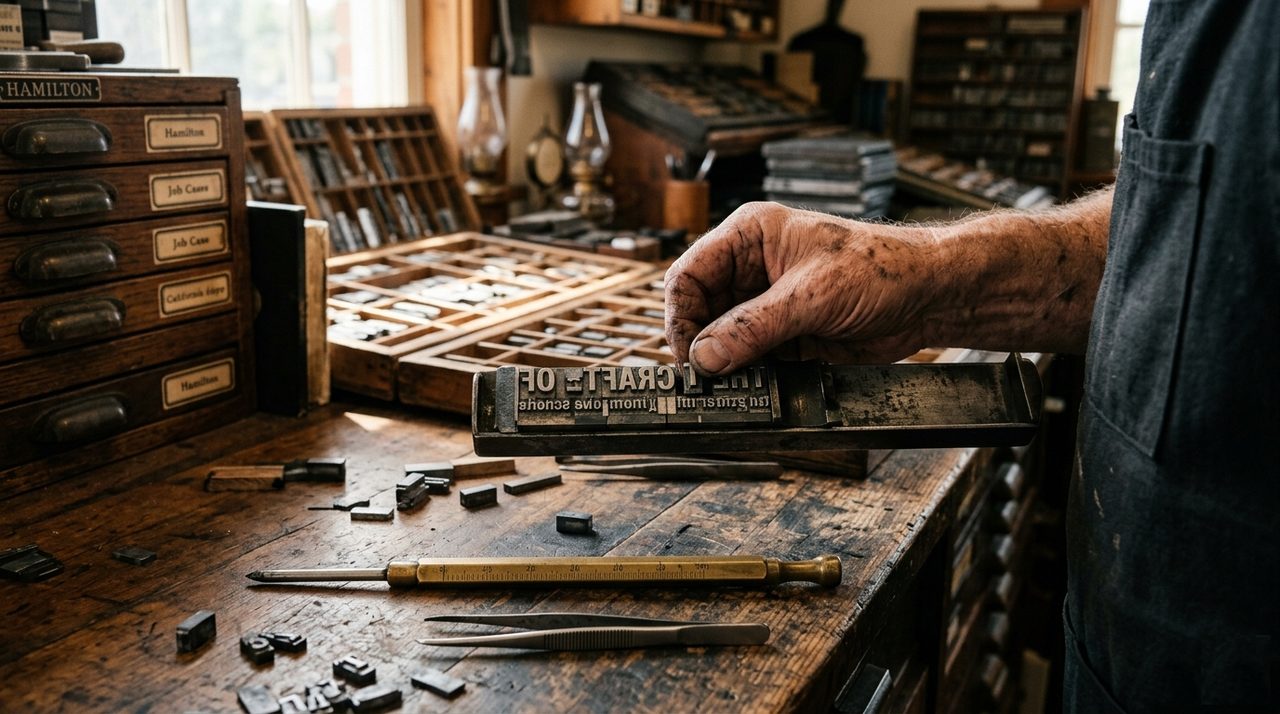
In graphic arts classification, relief printing represents the oldest, most direct, and tactile printing discipline in human history. The operational principle of relief printing is deceptively simple yet mechanically exacting: the image or text to be printed is raised above the non-printing areas of the matrix. When an ink roller passes across the surface, ink … Read more

About PPrintArchives

About PPrintArchives

PPrintArchives is the definitive digital knowledge repository devoted to printmaking history, movable type punchcutting, classical bookmaking, and typographic craft. We document the evolutionary technology of printed literature from Gutenberg to OpenType.

Learn More →
Printing History Incunabula to modern press
Bookmaking Craft Binding, marbling & gilding
Typographic Arts Leading, kerning & punchcutting